







Home education burnout: When it all feels too much
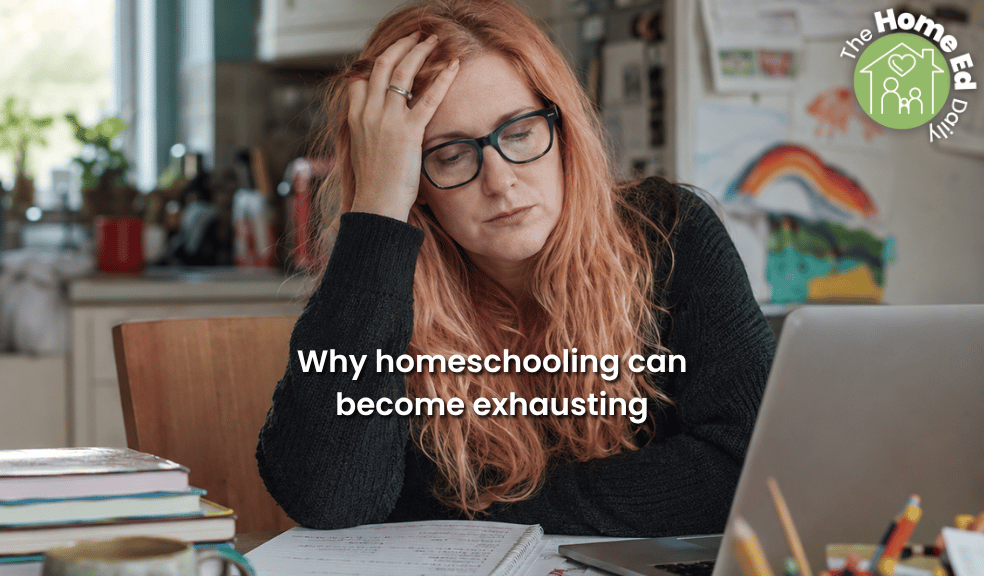
Home ed burnout: when you’re tired of being responsible for everything. Why homeschooling can become exhausting, even when you still know it’s right for your family
There are plenty of articles about starting home education. How to deregister. What resources to buy. How to find groups. How to reassure worried grandparents that your child won’t spend the next ten years feral in a hedge.
There is much less written about what happens three, five or ten years later, when home education is no longer new and exciting and you are simply very, very tired. Not tired of your children. Not necessarily tired of home education itself. Tired of being responsible for so much of it.
The planning. The driving. The researching. The booking. The emails. The social arrangements. The resources. The worry about whether you are doing enough. The worry that you are doing too much. The constant low-level awareness that your child’s education ultimately rests with you. And occasionally thinking: I would quite like everyone to sod off to school today. That thought does not mean your entire educational philosophy has collapsed. Sometimes it just means you need a day off.
Home education has a mental load
When people imagine home education, they often picture the visible parts. A museum visit. A maths lesson. A nature walk. A child reading on the sofa. What they don’t see is everything that happened before it.
Finding the museum. Checking whether it offers a home ed rate. Booking tickets. Working out whether parking requires remortgaging the house. Packing lunch. Checking opening times. Remembering somebody hates sandwiches this week. Driving there. Navigating the inevitable emotional wobble because the café has stopped selling the particular biscuit your child had been thinking about since Tuesday.
Then doing it again somewhere else next week. Home ed creates a surprisingly large amount of invisible work.
You’re not simply delivering education. You are often acting as researcher, administrator, taxi driver, resource buyer, social secretary, tutor finder, careers adviser, activities coordinator and emotional support department.
You are also still a parent. There are meals to cook, washing to deal with, appointments to remember, work to fit in and all the other ordinary bits of family life happening around it. Eventually the sheer number of decisions can become exhausting.
Decision fatigue is real
What shall we do for maths?
Should we carry on with this course?
Is this group worth the drive?
Do they need more structure?
Less structure?
Should we be thinking about GCSEs yet?
Should they be doing more writing?
Do we need another subscription?
Would this workshop suit them?
Should we encourage this or leave them alone?
Does this count as enough?
And then somebody asks what’s for dinner.
It isn’t always the actual teaching that burns people out. Often it is the endless process of deciding what should happen next. This can be particularly noticeable in very flexible or child-led home education. Freedom is wonderful, but freedom also involves choice. School hands families a timetable. Home education hands you a blank page. That blank page can be liberating. After several years, it can also occasionally feel like it is mocking you.
You can get bored with home education
I think we should be allowed to say this more often. Sometimes home education gets boring. Not learning. Not being with your children. Not the whole idea. The routine of it.
You may have walked around the same local museum so many times that you could give the guided tour yourself. You have printed another worksheet. You have driven to another group. You have listened to another podcast. You have tried another supposedly brilliant resource that lasted eleven minutes before being abandoned.
Even things you chose enthusiastically can become repetitive. That is normal in anything we do for years. People get bored with jobs they love. Writers get sick of writing. Gardeners sometimes look at the garden and think, “Absolutely not today.” Home education does not need to remain permanently inspirational in order to be worthwhile. There will be dull bits.
The problem with children being there all the time
There is another part of home education that can feel slightly taboo to admit. Your children are around a lot. Obviously. That is rather fundamental to the arrangement.
But there is a difference between loving spending time with your children and wanting to be available to somebody every waking minute. When children attend school, parents usually have some predictable separation built into their week. Home educating families often do not. Even when children are older and relatively independent, there is still another person in the house. They want food. They ask questions. They need lifts. They appear beside your desk exactly thirty seconds after you have finally achieved concentration.
If you work from home as well, the boundaries can become especially blurry. You may technically spend all day together while feeling as though you have barely had a meaningful conversation because you are simultaneously trying to work, clean, organise and think.
Sometimes you just want silence. That isn’t a rejection of your children. It is a fairly ordinary human requirement.
When your home becomes everything
Home educating can also blur the boundaries of the house itself. Home is home. But it may also be school, office, art studio, science lab, lunch hall, library, gaming room and occasional storage facility for forty-seven cardboard tubes somebody insists will eventually become useful. There is always evidence of life happening. Books on tables. Craft supplies. Half-finished projects. Chargers. Shoes. Cups. Educational resources that apparently reproduce overnight.
And because everyone is home more often, the house gets used more. More meals are prepared. More dishes appear. More mess accumulates. More heating is used. More people are constantly walking through the room you just tidied.
There are seasons when trying to maintain both an active home ed life and an immaculate house is simply a ridiculous proposition. Something has to give. Quite often, I recommend the house.
Comparison makes burnout worse
Home ed offers enormous freedom to do things differently. Unfortunately, social media gives us endless opportunities to observe how brilliantly everybody else appears to be using that freedom.
One family is studying marine biology on the Cornish coast.
A twelve-year-old is studying for their maths IGCSE.
Another has constructed a Tudor village.
Someone’s nine-year-old is learning Latin.
A teenager has started a business.
A seven-year-old is apparently reading Tolstoy.
Meanwhile, yours has been wearing the same hoodie for three days and is explaining Roblox lore to you while you stare blankly into your coffee. It is very easy to feel that everybody else is providing a richer, more organised, more interesting education. You are seeing fragments. You are not seeing the arguments before the photograph, the abandoned projects, the resources nobody used, the anxious days, the cancelled plans or the parent sitting on the stairs wondering why everyone else seems to be better at this.
School comparison can become home education comparison surprisingly quickly. Neither is particularly useful.
The worry about progress never entirely disappears
One of the hardest parts of home education is that there is rarely a neat external measure telling you everything is fine. There may be no termly report. No teacher saying they are where they should be. No class full of children the same age providing an obvious comparison. That is part of the freedom. It can also leave plenty of space for doubt. You can know perfectly well that children learn at different rates and still wake up one morning thinking:
Should they know more maths than this?
Have we neglected science?
When did they last write anything longer than a Discord message?
Are they actually learning enough?
I have been home educating for many years and I still have those moments. Experience doesn’t necessarily make every doubt disappear. Sometimes it simply means you recognise the wobble when it arrives and are less inclined to redesign your entire approach before lunch.
Burnout can make you try harder
This is one of the more unhelpful traps. You feel as though home education isn’t going particularly well. So you add more.
A new online lesson.
Another group.
A weekly timetable.
Extra maths.
A project.
A subscription.
A carefully colour-coded planner that will surely transform the family if everybody would only look at it.
And suddenly the person who was already overwhelmed is managing even more things. Sometimes the solution to home education burnout isn’t finding a better resource. It is removing something.
What can you stop doing?
This may be the most useful question. Not: what should we add? What can go? Does your child actually enjoy that weekly group? Is the subscription being used? Does the curriculum still suit them? Are you travelling somewhere every afternoon because it seemed like a good idea six months ago? Are you creating elaborate activities nobody asked for? Are you maintaining routines that have quietly stopped working?
Home education changes as children change. An activity that was wonderful at eight may feel pointless at twelve. A child who once wanted constant outings may now prefer long stretches at home. Someone who rejected anything formal may suddenly want a structured course.
You don’t have to keep doing something simply because it used to work. Dropping things can create more room than finding better things.
Let home education become ordinary again
Sometimes burnout comes from feeling that home ed should always be interesting. It doesn’t have to be. You do not need educational enrichment every Tuesday. You don’t have to produce seasonal projects, themed activities or Pinterest-worthy learning opportunities.
Some weeks can contain books, conversations, ordinary errands, screens, cooking, walks and whatever your children happen to be interested in. Some days may involve quite formal study. Others may barely resemble education if someone happened to photograph them.
That is one of the advantages of thinking about education over months and years rather than trying to make every individual day impressive. A quiet week doesn’t undo everything that came before it.
Protect something that belongs to you
This is harder than it sounds. Home education can slowly consume the bits of the week that once belonged to the parent.
Your interests become resources.
Your outings become educational opportunities.
Your social life becomes the home ed group.
Even your internet searches somehow end with twenty-three tabs about GCSE exam centres.
It helps to have something that is not for your children. Work. Art. Reading. Running. Gardening. Photography. Going somewhere alone. Seeing somebody without organising a children’s activity around it. It does not need to be productive. You are still a person outside your role as a home educating parent. That can be surprisingly easy to forget.
Let other people carry some of it
Home education does not mean personally teaching every subject, organising every experience and being present for every minute of learning. Other adults count. Tutors. Grandparents. Friends. Group leaders. Online teachers. Coaches. Librarians. Other home educating parents. Teenagers in particular may benefit from having adults in their lives who are not their parents.
Sometimes outsourcing a small part of home ed is not about academic need at all. It is about removing one responsibility from your brain. A weekly class that somebody else plans and delivers can be worth far more than the hour of education it provides. It is one hour in which you are not the person generating what happens next.
You are allowed to have easier seasons
Families change. People get ill. Work becomes demanding. Money gets tight. Parents are exhausted. Children go through difficult periods. Teenagers become teenagers. There may be months when home education is rich and busy and full of projects. There may be months when you operate on much simpler foundations.
Reading.
Talking.
Some maths.
A couple of regular activities.
Friends.
Getting outside.
Living.
Education does not have to operate at maximum capacity all year. In fact, very few healthy things do.
Sometimes the wobble is telling you something
It is worth distinguishing ordinary fatigue from something that genuinely needs changing. If you dread every day, resent everything connected with home education, feel permanently overwhelmed or know that the current arrangement is making family life miserable, it deserves more than telling yourself to push through.
Perhaps your approach needs to change.
Perhaps your child needs more independence.
Perhaps you need more support.
Perhaps something you once believed about home ed no longer fits the family you have now.
And yes, sometimes families decide that school, college or another form of education is the right next step. That is allowed too. Home education does not need to become an identity you are trapped inside. The goal is not to prove unwavering commitment to one particular educational model. The goal is to help your child receive an education that works for them while trying not to destroy yourself in the process.
You don’t have to love every day of it
I love what home education has given our family. I love the flexibility. The time. The conversations. The extraordinary rabbit holes. The ability to respond to the child in front of me rather than a timetable designed for thirty people. I still get tired of it sometimes. Those two things can exist together.
You can deeply value home education and be fed up with arranging another activity. You can believe it is right for your child and desperately want an afternoon alone. You can appreciate the freedom and feel crushed by the responsibility. You can have a week where almost nothing goes to plan without needing to question the entire decision. Home education is family life. And family life is not a permanent state of gratitude, creativity and fascinating learning.
Sometimes everyone is tired.
Sometimes the house is a mess.
Sometimes the fascinating educational opportunity can wait until Thursday.
And sometimes the healthiest thing you can do for your home education is stop trying quite so hard.
Excuse the use of the word homeschooling on the image. I’m using it purely for SEO and search visibility. In the UK, the correct term is home education. Read why the difference matters: Home education vs homeschooling