



Home education resources for families home schooling in England
Looking for resources to support your home education journey? You’re in the right place. Whether you’re new to home ed or have been doing it for years, this section is packed with educational websites and online tools to help you plan, organise, and inspire flexible learning at home. A quick note: We share links to tutors, courses, and resources that may be useful to home-educating families. Please do check carefully that they’re the right fit for your child, as we can’t take responsibility for external services.
Do check out our Courses and Lessons page and the Postal Subscriptions list too.
Multi-subject Home Education Resources | Free & Paid

Looking for home education resources that cover more than one subject? This collection...
Science & STEM Resources for Home Education | Free & Paid

Looking for science resources for home education? We've gathered a...
English and Literacy Resources for Home Education

Looking for English and literacy resources for home ed? We've gathered a collection of...
Maths Resources for Home Education | Free & Paid

Looking for maths resources for home education? We've gathered a collection of free...
Art and Design Resources for Home Education | UK Guide

Looking for art and design resources to use at home? This collection brings together useful...
Geography Resources for Home Education | Maps & Games

Looking for geography resources for home education? We've gathered a...
History Resources for Home Education | Free & Paid

Looking for history resources for home education? We've gathered a...
Language Learning Resources for Home Education | Free & Paid

Looking for language learning resources for home education? We've...
Home Education Extras | Life Skills, Cooking, Coding, Music & More

Not everything we learn fits neatly into a school subject. This...
Online Courses, Lessons & Tutors for Home Education | UK

Looking for online courses, lessons or tutors for home education? We've...
Free maths app for home education: Help test BrightWren
Help shape a new maths app for 7 to 11-year-olds
Advertisement feature | Paid guest contribution
This article was contributed by Matthew O'Connor, who paid a fee for publication, including a link to their website. All guest articles are reviewed for relevance and must meet The Home Ed Daily's editorial standards.
It’s called BrightWren. It covers Years 3 to 6 and is now in free beta.
I'm Matthew, a dad and product designer with 15 years’ experience, and for the past few months I've been building a maths app with my son Albie as chief tester. It's called BrightWren, it covers Years 3 to 6, and it's now in a free beta. I'd love home educating families to try it and tell me honestly what works and what doesn't.
What it is
BrightWren is short bursts of maths practice dressed up as a space game. Children fly between planets, rescue aliens and earn trophies, and every planet is a real maths topic. There's a quick five-question daily challenge for busy days, and a ten-question sprint for when they're in the zone.
Home: a five-question Daily 5, quizzes by topic, and Planet Pickup, the space game.
Planet Pickup: each planet is a topic. This is Year 3 in the autumn term.
Questions get harder or easier depending on how your child is doing, and when they get one wrong, they're shown how to work it out.
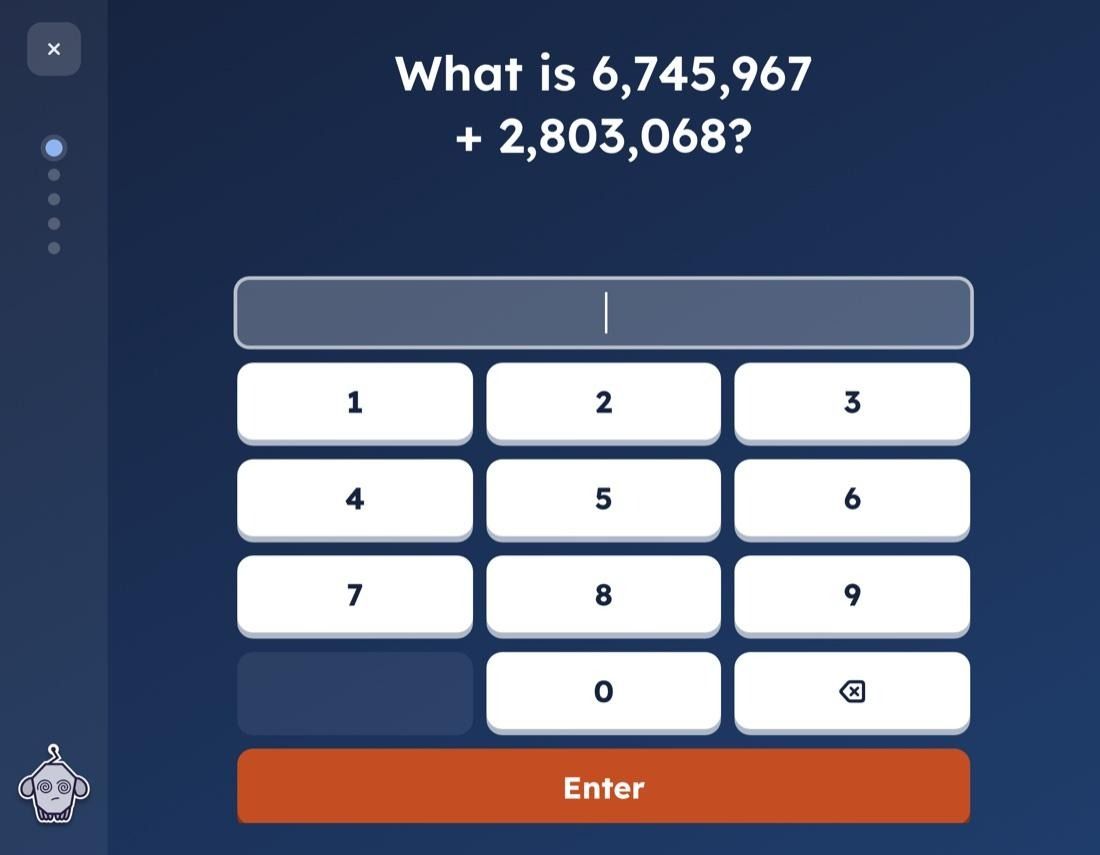
One question at a time, with big buttons that are easy to tap on a tablet.
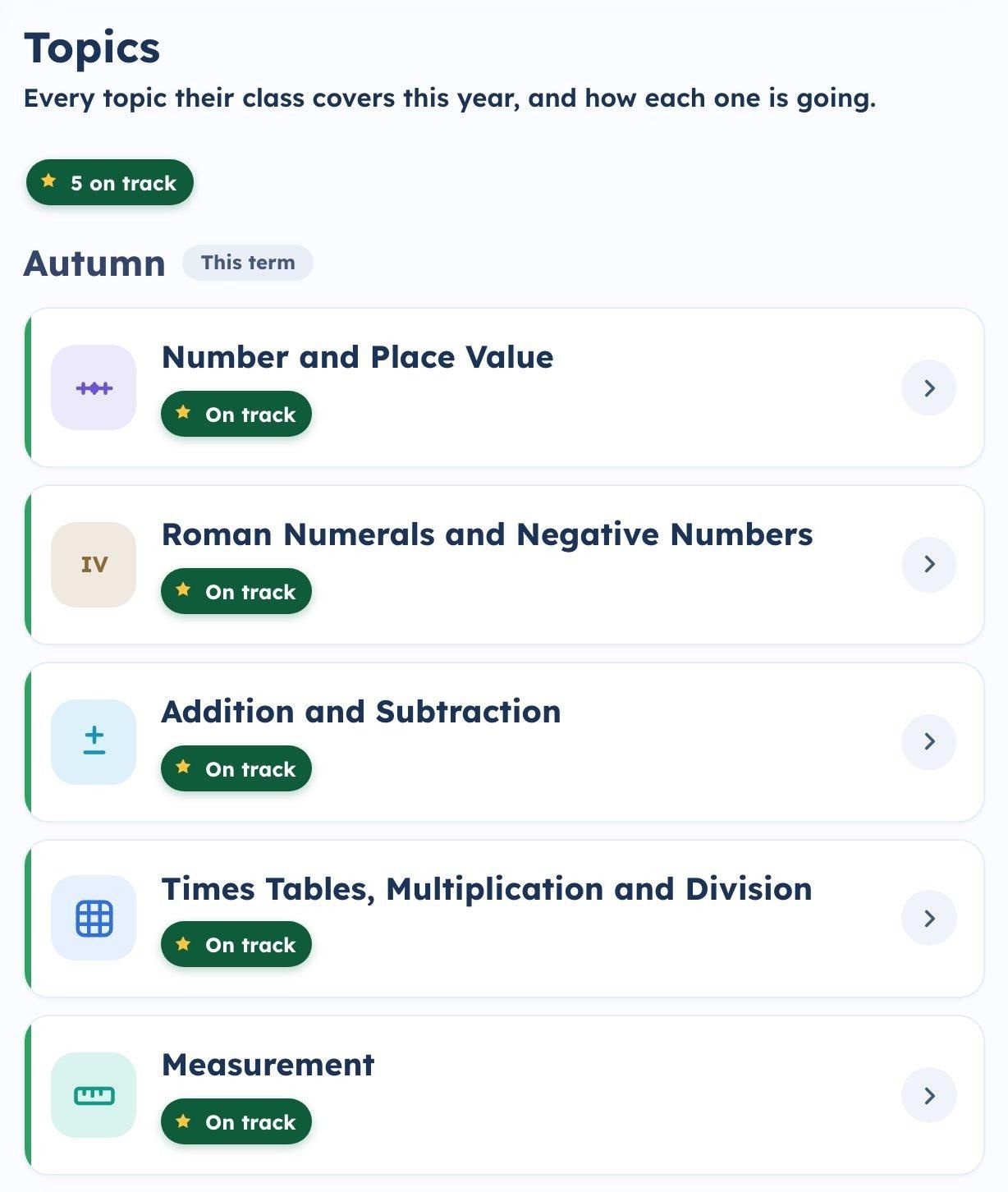
On the grown-up side you can see every topic for your child's year and how each one is going, rather than a single score.
The parent view: every topic this term, and how each one is going.
The structure question
Here's where I really need home educators. BrightWren follows a school-style sequence for English primary maths, organised by year group and term. Some families will find that useful as a ready-made route through KS2. Others do maths much more flexibly, following a child's interests or a different scheme entirely.
Nothing in the app is locked, so your child can jump to any topic at any time. But I don't yet know how that feels to a family who doesn't think in terms and year groups. Does the structure help, get in the way, or not matter at all? That's exactly the feedback I'm after, from both kinds of family.
What I'm asking
- Sign up. It takes about ten seconds with just an email address.
- Let your child use it for a couple of weeks, however suits you.
- Tell me what you think. A sentence is plenty, and the blunt stuff helps most.
The practical bits
- Free. Beta families keep it free for as long as we run it.
- Nothing to install. It works in the browser on a phone, tablet, or computer.
- No ads from other companies and no social features.
- Your child has no account of their own; they practise inside yours under a nickname.
- Made in the UK.
If you'd like to help shape it, you can join here: app.brightwren.co.uk/join
Thank you. Every bit of feedback goes straight into the next version.
Matthew O'Connor makes BrightWren at Not Another Studio Ltd.

Category
How to make art a regular part of home education when you don’t feel artistic
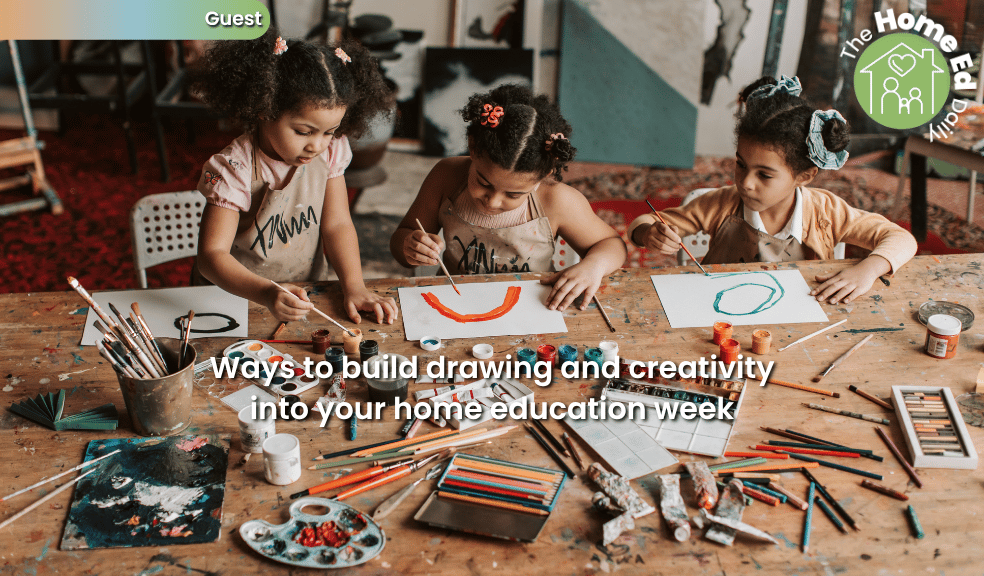
Simple ways to build drawing and creativity into your home education week
Advertisement feature | Paid guest contribution
This article was contributed by Kirsty Shadiac, who paid a fee for publication, including a link to their website. All guest articles are reviewed for relevance and must meet The Home Ed Daily's editorial standards.
"I'm not arty!"
I've lost count of how many times I've heard those words from parents over the years. Usually followed by something like, "I can't even draw a stick figure!"
Before Artventure, I ran my first little business teaching children's art lessons. I loved watching children discover what they were capable of, but I was always struck by how many parents were convinced that drawing was something they simply couldn't do.
Later, working as an artist-in-residence in schools, I noticed something similar. Many teachers weren't confident teaching children how to draw either.
It got me thinking. If so many adults have grown up believing they can't draw, who's teaching the next generation?
I've always believed that drawing is a skill everyone should have the opportunity to learn, just like reading and writing. You don't need to become an artist any more than you need to become an author, but being able to express an idea through drawing is a wonderful thing.
I wanted to break that cycle of one generation telling the next, "I can't draw."
The lesson that gave me an idea
One day, during an artist-in-residence programme, I was asked to teach 91 students in a single session.
Normally, I'd gather the children around a desk to demonstrate what we were going to draw. But there was absolutely no way I could fit 91 children around that desk!
So I decided to film the lesson beforehand and play it on the big screen.
What happened next was a real lightbulb moment.
The teachers were standing back. I was standing back. And every child was watching, drawing, learning new skills and experiencing success!
Nobody needed to be an expert standing beside them. They just needed someone to show them the steps in a way they could understand.
That experience eventually led me to create Artventure, an online library of step-by-step art lessons for children.
You don't have to know how to draw to help your children learn
If you're home educating your children and don't feel particularly artistic, I'd love you to know that you don't have to be good at drawing to help them learn.
You don't need to know how to draw a horse, understand perspective or have a cupboard full of expensive art supplies.
You just need to give your children opportunities to learn, practise and enjoy creating.
Sometimes that means drawing alongside them. Sometimes it means finding someone else to demonstrate a technique. And sometimes it simply means giving them a pencil and paper and seeing what happens.
The important thing is that art doesn't become something you avoid because you're worried you won't be able to teach it properly.
Keep the materials simple
One of the easiest ways to make art happen more often is to make it easy to get started.
If you need to search for an idea, buy special materials and spend half an hour setting everything up, it's tempting to decide you'll do it another day.
You really don't need much.
My favourite materials are simply paper, a black oil pastel, a big paintbrush, a pot of water and some watercolour paints. I use these almost every time because they're easy to work with and give such lovely results. The oil pastel makes a strong outline, while the watercolours quickly fill larger spaces with beautiful colour.
You could keep a small art box somewhere accessible so that when someone feels like drawing, everything is ready to go.
A simple drawing activity that actually happens is far more valuable than an ambitious project that never gets started.
Find a rhythm that works for your family
One of the lovely things about home education is that learning doesn't have to look the same in every household.
Some children might enjoy starting the morning with a drawing. Others might prefer an art activity after being outdoors, or drawing while listening to an audiobook.
You could choose one day each week to try something new, or simply keep the materials handy for when there's a natural opportunity.
If you're finding it difficult to get started, try setting aside just 15 or 20 minutes. That's enough time to learn a simple technique or begin a picture that can be finished later.
And if your child becomes completely absorbed and wants to keep going, that's wonderful too.
Art doesn't have to fit neatly into a timetable to be worthwhile.
Teach skills as well as encouraging imagination
I'm a big believer in giving children the freedom to experiment and use their imaginations. But I also believe there's enormous value in teaching them how to draw.
Sometimes people worry that showing children step-by-step techniques will limit their creativity. I see it quite differently.
Imagine a child who wants to draw a dog but has no idea where to begin.
Show them how to start with a few simple shapes, and suddenly they have something to work with. They can change the ears, add spots, give the dog a funny expression or draw a whole family of dogs.
Learning the technique hasn't taken away their creativity. It's given them more ways to use it.
It's a bit like learning to write. Once you know how to form letters and words, you can use them to tell whatever story you like.
Drawing works in much the same way.
What if your children are different ages?
You don't necessarily need a different art activity for every child.
A younger child might be happy drawing basic shapes and adding colour, while an older child might enjoy experimenting with shading, texture or a more detailed background.
They can work from the same starting point without producing the same result.
And don't worry if their finished pictures look nothing alike. That's part of the fun. In fact, that's the goal!
Sometimes children will follow every step carefully. Other times they'll take an idea and turn it into something completely different.
Both are valuable.
Have a go yourself, even if you're not confident
Remember those parents who told me they couldn't draw a stick figure?
Many adults have carried that belief around since childhood, and I've seen Artventure change that for parents as they learn alongside their children.
But children also hear the way we talk about our own abilities.
Instead of saying, "I'm hopeless at drawing," try, "I've never learnt how to draw that. Shall we have a go?"
You might be surprised by what you can do when someone shows you where to start.
And even if your drawing turns out a little wonky, that's fine! Be sure to use positive words about your own efforts, too. Something as simple as "I'm proud I gave that my best shot!" shows your children that trying is something to celebrate.
Children don't need you to produce beautiful artwork. It's good for them to see that learning takes practice, mistakes are normal and you can enjoy something without being brilliant at it.
Give it a place in your week
Art can be a lovely change of pace. It gives children a chance to explore their ideas and enjoy making something with their own hands.
It doesn't need to be complicated, expensive or perfectly planned.
If you're unsure how to teach drawing, guided lessons can be a helpful starting point. That's why I created Artventure, where children can watch a drawing demonstration and follow along at their own pace.
But whether you're using a guided lesson, drawing something you've spotted in the garden or simply putting pencils and paper on the table, my encouragement is the same.
Drawing isn't a talent you're either born with or without. It's a skill we can all learn.
And perhaps the most wonderful outcome isn't just the artwork your children create today. It's that they'll grow up believing drawing is something they can do, with happy memories of learning and creating alongside you.
One day, they might be the adults confidently showing their own children how.
About the author
Kirsty Shadiac is an Australian artist and founder of Artventure, an online library of step-by-step art lessons for children, and Art Eye Deer for older children and teenagers. Since 2012, Artventure has been used in 149 countries, helping children develop their drawing skills, creativity and confidence.
Looking for more ideas? Explore our Art & Design Resources
Category
How a home education photography course helped a Suffolk teen find her passion

With results day around the corner, Suffolk teen Caitlin Banham is an example of how home education can transform your relationship with learning.
Advertisement feature | Paid guest contribution
This article was contributed by Aced Qualifications, who paid a fee for publication, including a link to their website. All guest articles are reviewed for relevance and must meet The Home Ed Daily's editorial standards.
Teacher and founder of Aced Qualifications, Deborah Hayward, is currently celebrating the successful impact their photography course has had upon recent student Caitlin who, after being inspired by her studies at Aced Qualifications, has been accepted to study for a Level 3 Diploma in Photography at her local college this coming September. Founded by Aylesham-based educator Deborah Hayward, Aced Qualifications was established specifically for home-educated learners, calling themselves a ‘small online learning provider with a big heart’ and Caitlin is one of their many success stories.
Like many young people who are leaving mainstream education in place of homeschooling, Caitlin began her home education journey in 2021 (due to high anxiety and medical issues). Having multiple surgeries and medical complications that affected her knees, eyes, legs and ears meant that Caitlin had to give up her passion for sport and dance and struggled to find a supportive environment at school and college. Hence why it has been hugely important that Aced Qualifications has helped Caitlin discover a passion and platform to pursue further studies. Caitlin isn’t alone with this - many parents find their children are struggling with the demands and structure of traditional education and turning to home ed instead.
Speaking of the positive impact the course has had upon her daughter, Claire Banham said “Joining an Aced Qualifications course has been the best thing she has done! Not only has it increased her photography skills, but her confidence has grown so much… It has just been amazing to see her blossom.”
Caitlin too acknowledges the transformation the course has resulted in ‘`I have really loved this course and have got so much out of it that I now feel confident enough to go to college to study level 3 Photography. I’m really excited about this next step in my life and wouldn’t be ready to do this without Aced Qualifications.”
Aced Qualifications has helped over 400 learners like Caitlin by providing nationally accredited, exam-free creative qualifications. They offer portfolio-assessed courses in Art & Design, Photography, Sport, and Graphic Design which are all tailored specifically for those outside traditional school systems. Their flexible programs are designed to nurture confidence, creativity and learner wellbeing.
To find out more visit Aced Qualifications