





Home Education Futures report 2026: A new approach to home education in England
A new independent report is calling for a different approach to home education in England, one that recognises its value, provides practical support for families and builds better relationships between home educators and local authorities.
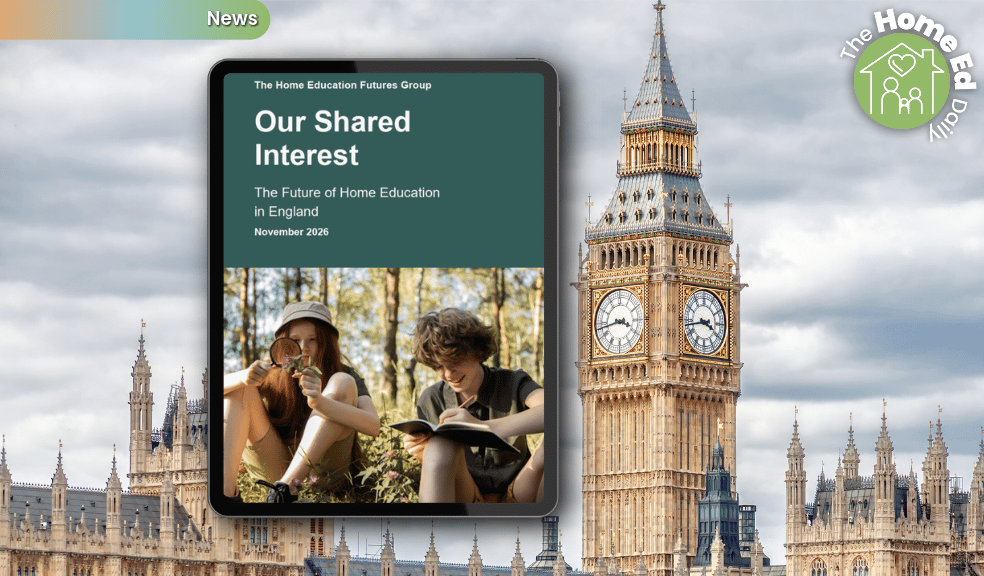
Published on 23 November 2026, Our Shared Interest: The Future of Home Education in England argues that the government should focus on understanding why home education is growing, addressing the problems families face and recognising the many different ways children learn. The report comes at an important time, following the passage of the Children's Wellbeing and Schools Act 2026 and the launch of the government's consultation on new Children Not in School regulations and statutory guidance. Rather than simply calling for greater oversight, the report proposes a more constructive approach, with children's individual needs and educational opportunities at its centre.
Who is behind the Home Education Futures report?
The report was produced by the Home Education Futures Group, an independent group convened by Lord Nigel Crisp, a Crossbench peer and former Chief Executive of the NHS. Its members include home educating parents, teachers, former local authority education professionals and people with experience of special educational needs and disabilities (SEND).
The group met between March and October 2026, working voluntarily and without external funding. Members also drew on discussions with home education organisations, researchers, local authority representatives, families and government officials. Their aim was to improve understanding of what home education is really like and explore how families and local authorities could work more constructively together.
The group has also submitted detailed recommendations about the implementation of the Children's Wellbeing and Schools Act directly to the Department for Education.
This is an independent report rather than an official parliamentary inquiry, but it brings together considerable professional experience, research and first-hand knowledge of home education.
Why home education in England is changing
One of the report's central findings is how significantly home education has changed over the past decade.
According to Department for Education figures, approximately 175,900 children in England were home educated at some point during the 2024/25 academic year. Around 126,000 were recorded as home educated on the autumn 2025 census date. However, these figures only account for children known to local authorities. Many families who have never registered their children at school are not currently required to notify their local authority that they are home educating. The true number of home educated children in England is therefore likely to be higher, although it is not known by how much.
The report highlights how the home educating population has grown roughly fourfold over ten years, while the circumstances of families have also changed. A decade ago, home education was more commonly associated with families choosing it for philosophical, religious, cultural or lifestyle reasons. Those families remain an important part of the community, but the report describes a growing number of parents who are home educating because their children's needs have not been met within the school system.
Some children have experienced bullying, anxiety, school-related distress or unmet SEND needs. Others have been unable to access appropriate school provision or have spent lengthy periods waiting for suitable placements. For these families, home education may offer the flexibility, individual attention and security that their children need. But it can also involve considerable financial and emotional pressure, particularly when parents have taken on educational responsibilities because suitable school provision was unavailable.
The report recognises both experiences: families who positively choose home education as their preferred approach, and those who have arrived there after exhausting other options.
It even recommends removing the word elective from the official term Elective Home Education, acknowledging that many parents do not feel they have had a genuine choice.
The group argues that the government needs to understand these changing circumstances rather than treating all home educating families as though they have the same needs or motivations.
What are the report's five main recommendations?
The Home Education Futures Group identifies five priorities for improving the future of home education in England. These focus on better examination access, fairer assessments of suitable education, consistent local authority practice, more flexible educational opportunities and improved support for children with SEND and mental health difficulties. The full report develops these ideas into ten recommendations covering home education policy, safeguarding, support and the wider education system.
1. Make GCSE exams easier and cheaper to access
One of the report's strongest recommendations concerns access to examinations.
For many home educating families, arranging GCSEs and other qualifications can be difficult and expensive. Parents may struggle to find an examination centre willing to accept private candidates, particularly where children require access arrangements or wish to take subjects involving practical assessments. Families may also face significant travel costs, accommodation expenses and examination fees.
The report argues that every home educated child should have access to examinations locally, without families having to shoulder unreasonable costs. It proposes using some of the public expenditure saved when children are not educated in state schools to help fund examinations and improve local authority home education services. This would require government action and funding decisions, but the group believes it would remove a substantial barrier to further education and employment.
A promising example from Devon
The report highlights the University of Exeter's work to improve opportunities for home educated young people. Alongside admissions support and outreach activities, the university has trialled a dedicated examination centre in partnership with Exeter College, Devon County Council, Cornwall Council and examination board AQA. The initiative offered eligible Year 11 students free GCSE English Language and Maths examinations, with additional support including mock examinations and progression advice. According to the report, the first year produced encouraging results, and around 300 young people were already on the waiting list for the next examination cycle.
It is a valuable example of what can happen when institutions recognise the practical barriers facing home educated students and work together to address them.
2. Develop a fairer way to assess suitable home education
The report also calls for a fundamental rethink of how local authorities assess whether children are receiving a suitable education.
Under the Education Act 1996, parents must ensure that children of compulsory school age receive an efficient, full-time education suitable to their age, ability, aptitude and any special educational needs. However, home education does not have to follow the National Curriculum, school timetables or conventional teaching methods. Children may develop skills at different rates, pursue particular interests in considerable depth or learn through everyday experiences and activities. The group argues that judging these different approaches against school-based expectations can fail to recognise the education children are actually receiving. Rather than attempting to define one ideal model of suitable education, it recommends that local authorities concentrate on identifying clear evidence of educational failure.
The report proposes examining four areas:
-
Cognitive development: Whether children have meaningful opportunities to learn and develop essential skills.
-
Social development: Whether children experience severe isolation or a lack of opportunities for social interaction.
-
Practical development: Whether children are gaining the skills and understanding needed for adult life.
-
Emotional wellbeing and safety: Whether children are learning in safe, supportive environments free from harm or coercion.
The intention is to establish clearer, more objective grounds for intervention while respecting the different educational approaches families choose. The group also recommends that local authorities work with families to address concerns wherever possible, using formal enforcement as a last resort. This proposal would represent a change in how suitable education is assessed. It is not the current legal test, but it offers an approach designed to protect children without unnecessarily restricting educational diversity.
3. Introduce a national code of conduct for home education officers
Another major recommendation concerns relationships between home educating families and local authority Elective Home Education teams.
The report recognises that these relationships vary considerably across England. Some local authorities take an open, respectful and supportive approach, recognising different educational methods and concentrating additional attention where there are specific concerns. Others have been criticised by families for intrusive enquiries, inconsistent expectations or assessments that appear to favour school-style learning. The report shares examples of good practice from several authorities, including Hampshire, Camden and Essex. These examples demonstrate the value of clear communication, individual consideration, practical support and officers who understand the different circumstances of home educating families.
However, the report also acknowledges the significant imbalance of power between individual parents and local authorities. It highlights substantial differences in the use of School Attendance Orders across England and calls for closer examination of why enforcement practices vary so widely.
The group recommends introducing a national code of conduct for local authority home education officers, setting out consistent expectations for how families should be treated. It also calls for better training, professional development and adequate staffing. Home education officers need a strong understanding of child development, SEND and different educational approaches if they are to make informed decisions.
The report argues that constructive relationships are not simply preferable for families. They can also help local authorities identify genuine problems, offer appropriate support and fulfil their responsibilities more effectively.
4. Expand flexi-schooling and community learning opportunities
The group also recommends expanding opportunities for flexi-schooling.
Flexi-schooling is an arrangement agreed between parents and a school in which a child remains registered at school but attends for part of the week, receiving home education for the remaining time. For some children, particularly those with SEND, mental health difficulties or previous experiences of trauma, this can provide a valuable alternative to the choice between full-time school attendance and full-time home education.
The report highlights Huxley Church of England Primary School in Cheshire, where children typically attend three days a week and receive home education for the remaining two. The school uses a flexible approach that prioritises individual needs, wellbeing and strong relationships with families. The report suggests that more schools and academy trusts could develop similar arrangements, offering children educational opportunities that better reflect their circumstances.
It also looks beyond schools themselves.
Community education hubs
The group proposes developing community education hubs, bringing together local organisations, educational providers, businesses and families. These could help families access activities, resources, specialist knowledge and opportunities for practical learning.
One example highlighted in the report is the STEM Discovery Centre in Stevenage, a partnership involving Airbus and North Hertfordshire College. The centre provides hands-on science and technology experiences for school groups and home educating families, with approximately 1,500 home educating families on its mailing list. The report sees considerable potential for similar partnerships elsewhere.
Rather than treating home education and school as entirely separate worlds, it encourages educational opportunities that benefit children across different settings.
5. Improve support for children with SEND and mental health difficulties
The fifth main recommendation focuses on children whose educational needs are not being adequately met.
The report recognises that many families have turned to home education because appropriate support or suitable school provision was unavailable. Some children have experienced bullying, school-related anxiety or significant emotional distress. Others have been affected by delays in assessments, unsuitable placements or difficulties accessing specialist provision. The group argues that these underlying problems must be addressed, rather than expecting additional regulation of home education to resolve them.
It calls for better support for children with SEND and mental health difficulties, whether they are educated at home or attend school. Its recommendations include taking stronger action against inappropriate off-rolling, where schools remove pupils from their rolls, and improving the speed and effectiveness of school place allocations. The group supports the government's ambition to improve SEND and mental health provision, while recognising that reforms will take time and may not help children currently struggling to access suitable education.
The underlying message is that children should receive appropriate support wherever they learn, and families should not feel they have to take on responsibility for home education simply because no suitable alternative is available.
Home education, safeguarding and children's wellbeing
The report also gives considerable attention to safeguarding, particularly in the context of the Children's Wellbeing and Schools Act 2026.
It argues that home education should not automatically be treated as a safeguarding concern. At the same time, it recognises that children can experience harm or neglect in any educational setting and that genuine safeguarding concerns must be taken seriously. The group recommends clearer boundaries between the responsibilities of home education officers and those of children's social care professionals. Home education officers should be able to recognise and report safeguarding concerns, but assessments of parental capacity, domestic circumstances or possible abuse should be handled by professionals with the appropriate expertise and training. The report also argues that a family's refusal of a home visit should not automatically be interpreted as a safeguarding concern where they are engaging through other reasonable means.
Its proposals are intended to ensure that educational enquiries remain focused on education, while genuine safeguarding concerns are referred through the appropriate channels. The group believes that trust, good communication and constructive relationships with families can themselves contribute to better safeguarding.
What does the report say about the Children's Wellbeing and Schools Act?
The timing of the report is particularly significant.
The Children's Wellbeing and Schools Act 2026 introduces substantial changes affecting home education, including compulsory Children Not in School registers, additional information requirements and wider local authority powers. Although the Act has passed, the new Children Not in School measures are not yet operational. The Department for Education is currently consulting on the regulations and statutory guidance that will shape their implementation.
The Home Education Futures Group questions whether increasing regulation and administrative demands is the most effective response to the growing number of home educated children. It argues that local authorities already have important responsibilities and powers, but many teams lack the resources and training needed to carry them out consistently.
The report also raises concerns about a blanket approach that does not sufficiently recognise children's individual needs, families' circumstances or the diversity of home education. Instead, it calls for proportionate information requirements, clearer professional standards, more consistent practice and a greater emphasis on practical support.
The group has submitted detailed proposals to the Department for Education concerning the new legislation and guidance. These recommendations are not government policy, but they offer an important contribution to the ongoing discussion about how the new framework should operate.
What else does the report recommend?
Alongside its five headline priorities, the full report makes several further recommendations.
These include ensuring that requests for information from home educating parents are proportionate, with annual updates normally sufficient unless there is a specific reason for more frequent contact. The group also calls for independent research into why home education has increased, greater recognition of the contribution home educating families make to education, and improved procedures for challenging local authority decisions. It proposes introducing an initial local authority review stage for disputes involving School Attendance Orders and other educational decisions. The report also recommends officially adopting the term Home Education rather than Elective Home Education, recognising the growing number of families who would prefer school provision if an appropriate option were available.
Together, these proposals form a wider vision for home education in England, one that recognises parental responsibility, children's individual needs and the importance of constructive relationships.
What happens next?
The Home Education Futures Group intends to review the impact of its work in a year's time.
Whether the government adopts its recommendations remains to be seen, but the report provides a substantial contribution at a time when the future of home education in England is undergoing significant change. Perhaps one of its most important messages is that the growth in home education cannot be understood without looking at the wider education system. Children's experiences in school, unmet needs, access to support and the availability of suitable educational settings all influence the decisions families make.
The report also offers a reminder of what home education can provide: individual attention, flexibility, independence, community involvement and opportunities for children to develop their interests and abilities. There is much here that deserves serious consideration, not only from government and local authorities, but from everyone involved in children's education.
How can home educating families support these recommendations?
The report has now been published, but there are opportunities for families to help bring its findings and recommendations to the attention of decision-makers.
Respond to the Children Not in School consultation. The Department for Education is currently seeking views on the regulations and statutory guidance that will implement the new measures within the Children's Wellbeing and Schools Act. Several consultation questions relate directly to issues raised in the report, including suitable education, local authority training, support for families and the proportionality of the proposed arrangements. Families can refer to the Home Education Futures report when explaining their views, particularly where its recommendations reflect their own experiences.
The consultation closes on 3 February 2027. Read about and respond to the government consultation
Share the report with your MP. Families can also contact their Member of Parliament, provide a link to the report and explain which recommendations they consider particularly important. You might wish to highlight examination access, SEND support, local authority practice or the need for a more individual approach to assessing education. You can ask your MP to consider raising these issues with the Department for Education and seeking a response to the report's recommendations.
Share the report with others. Home education organisations, local authority teams, education providers and families all have an interest in how these policies develop. The more widely the report is read and discussed, the greater the opportunity for its findings to inform future decisions.
Read the full Home Education Futures report
Our Shared Interest: The Future of Home Education in England was published by the Home Education Futures Group on 23 November 2026.
It includes research, statistics, examples of home education in practice, local authority experiences and detailed recommendations for improving the future of home education. The report is free to read.