


The Toadstool Post review: a woodland adventure subscription for children
The Toadstool Post review: screen-free nature fun through the letterbox
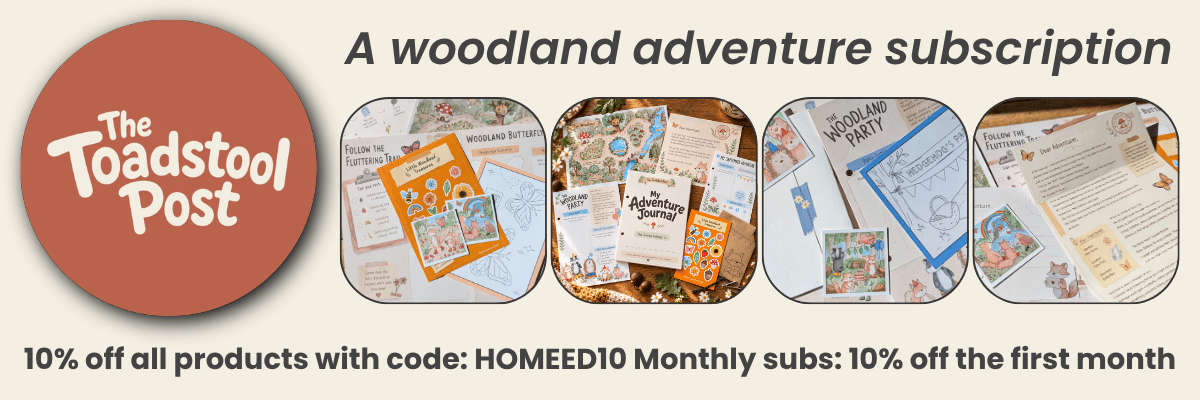
The Toadstool Post is a monthly children’s snail-mail subscription combining woodland stories, nature activities, stickers and a growing Adventure Journal. I tried the August and September packs to see how well it might work for home educating families.
💚 Gifted review: The Toadstool Post sent me these packs to try so I could take a proper look and share my honest thoughts. This review is independent and unpaid, and all opinions are my own. I only feature resources on The Home Ed Daily that I genuinely believe are relevant and useful to home educating families. If you buy through my link, I’ll receive a small commission at no extra cost to you. Thank you 💚
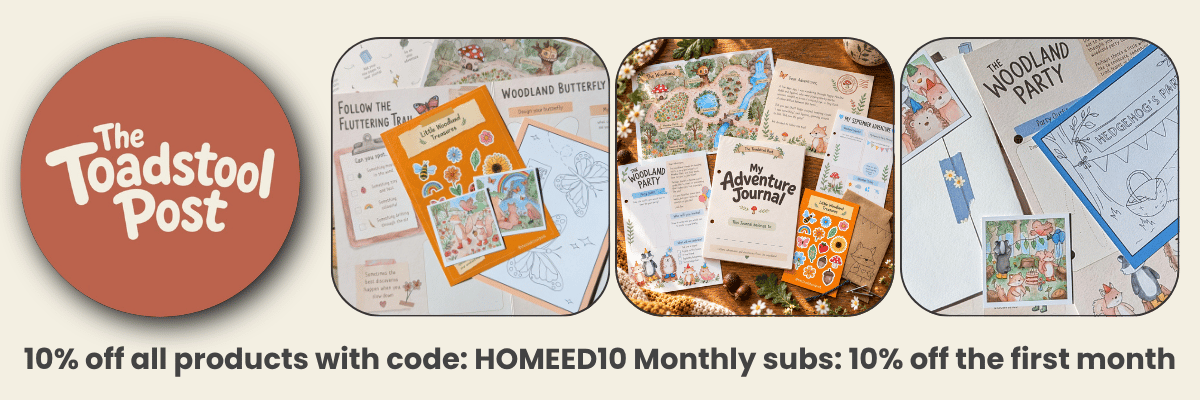
Home Ed Daily readers can get 10% off all Toadstool Post products with the reader discount code HOMEED10. For monthly subscriptions, the 10% discount applies to the first month only, after which the subscription returns to the usual monthly price.
There is still something rather lovely about receiving actual post. Not a parcel containing something you ordered three minutes after seeing it on Instagram, and definitely not a bill, but an envelope with your own name on it and something inside that was made for you. That is the idea behind The Toadstool Post, a monthly children’s subscription built around letters, stories, activities and adventures in an illustrated woodland world.
I was kindly sent the August and September editions of The Toadstool Post to have a proper look through. And my first impression was very simple: this is really, really cute. Not shiny-plastic-subscription-box cute. More old-fashioned nature journal, tiny letter from a fox, pencils-on-the-kitchen-table cute.
What is The Toadstool Post?
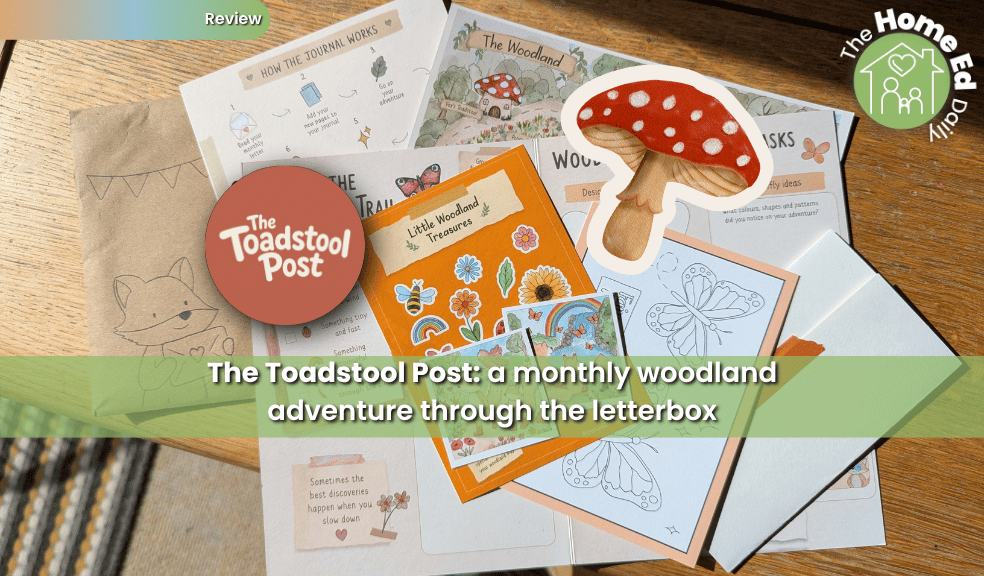
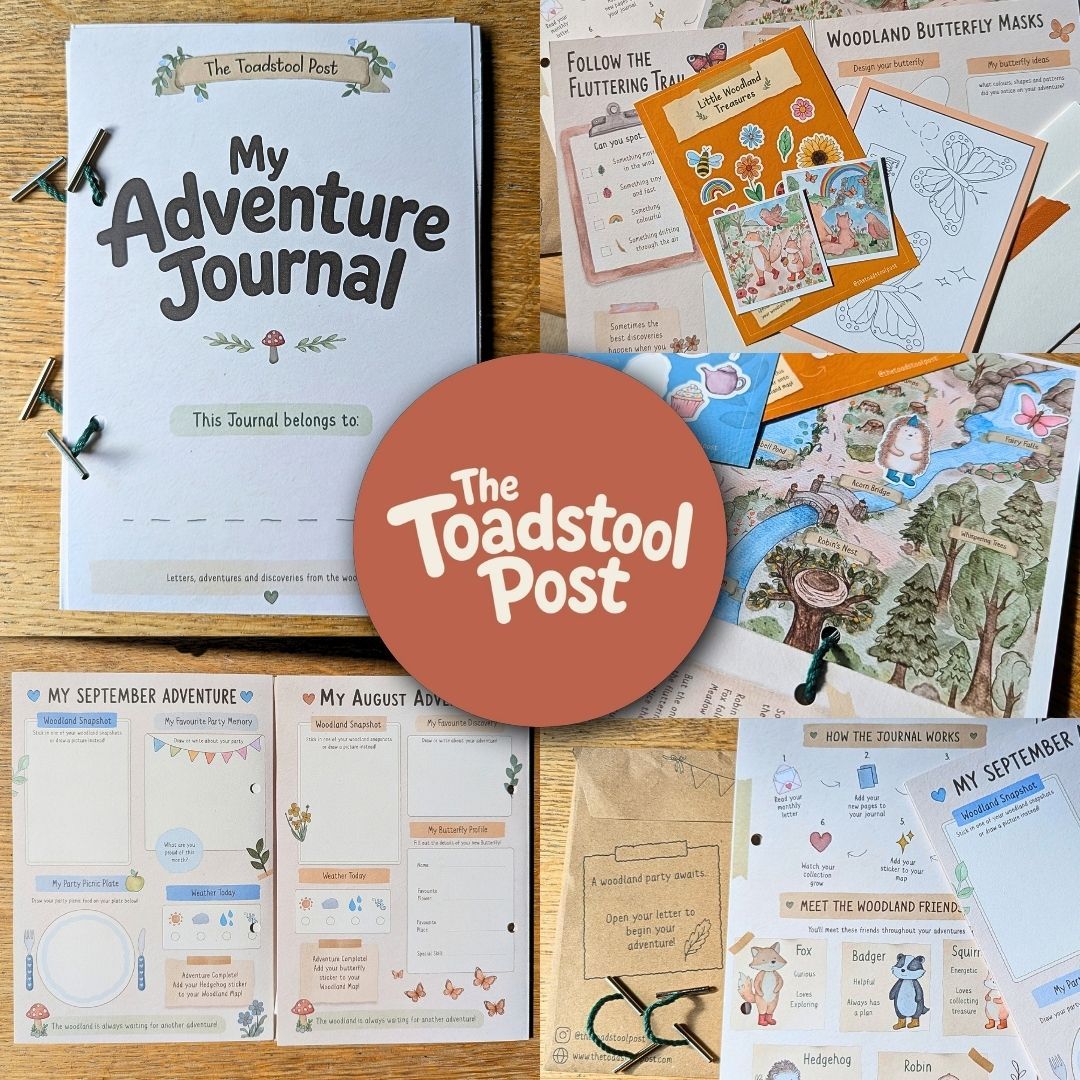
The Toadstool Post describes itself as a monthly “snail mail adventure” for children aged three to eight. Each delivery arrives through the post addressed to the child and includes a letter from Fox, new pages for a growing Adventure Journal, stickers, a colouring postcard and illustrated Polaroid-style prints. The first subscription delivery includes the Adventure Journal itself.
The whole thing takes place within the same little woodland world, inhabited by Fox, Badger, Squirrel, Hedgehog and Robin. There is even a map showing places including Bluebell Pond, Pebble Stream, Poppy Meadow, Fairy Falls, Whispering Trees and Badger’s Burrow. Children add stickers and pages as the months go by, so rather than receiving an unrelated bundle of activities each time, they gradually build up their own woodland journal.
That continuity is probably my favourite part of the idea. It makes the subscription feel more like an ongoing story than another printable activity pack that gets completed and quietly migrates towards the recycling bin.
What was in the packs I received?
I received the August and September editions, so I could see how one month leads into another.
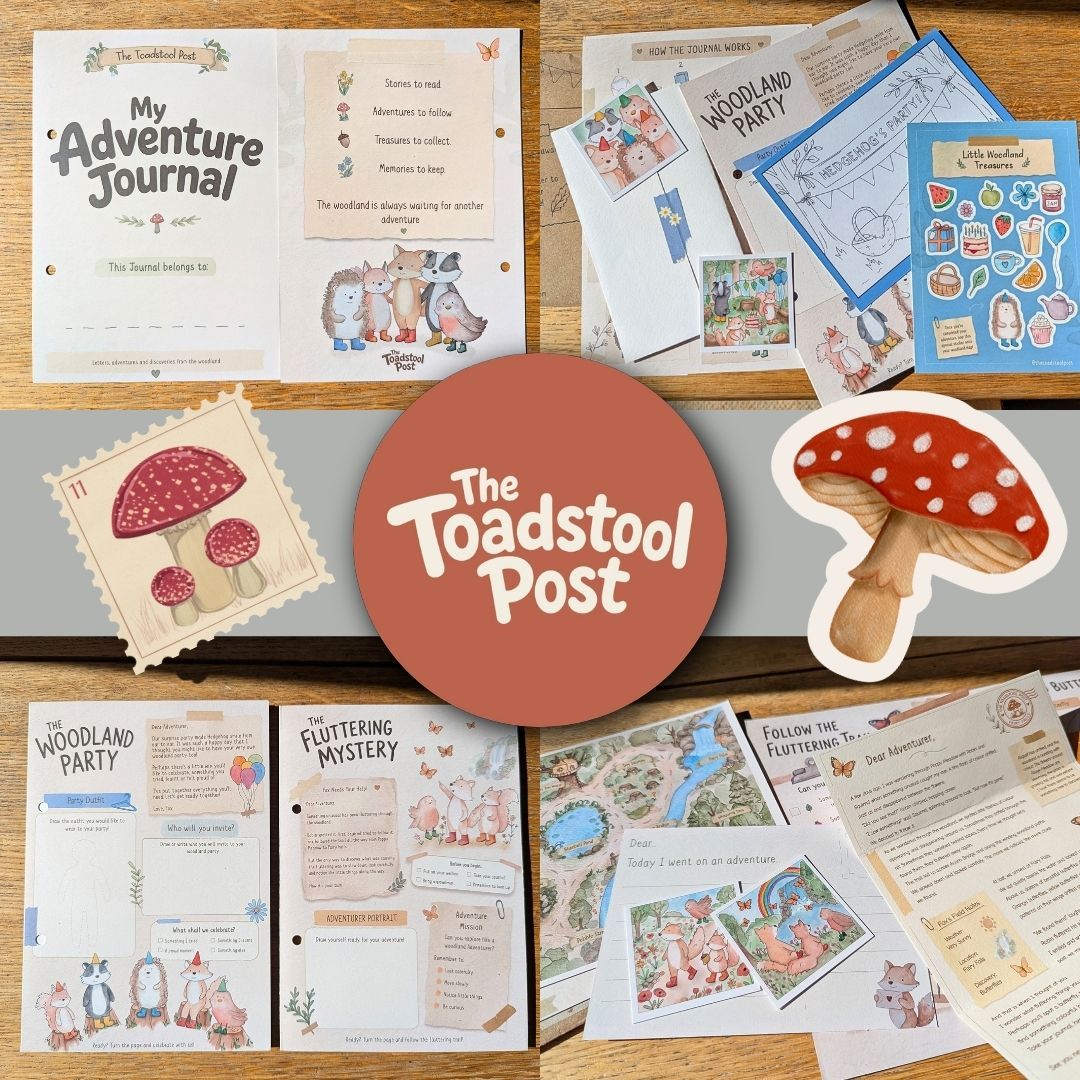
August centred around The Fluttering Mystery. Fox asks for help investigating something unusual seen fluttering through the woodland. The story sends children off looking closely at the world around them, following a fluttering trail and noticing small things. There were nature prompts, a butterfly-themed adventure, a butterfly mask activity, space to draw an “adventurer portrait”, a woodland snapshot page and a monthly journal page for recording things such as the weather and a favourite discovery. There was also a letter from Fox describing the adventure, little illustrated photographs and a sheet of “Little Woodland Treasures” stickers.
September moved on to The Woodland Party, where the woodland friends plan a surprise party for Hedgehog. Again, it isn’t just a story to read. Children are invited into it. They can design their party outfit, decide who to invite, think about something they are proud of, plan a picnic plate and head outdoors to collect leaves and other natural materials for decorating. There are instructions for making simple leaf bunting and woodland place cards, along with another monthly journal page recording the adventure.
There is a nice rhythm running through both editions. Read the letter, discover what is happening in the woodland, go and do something, draw or make something, then add a record of it to the journal. The journal itself explains that process very simply: read the monthly letter, add the new pages, go on the adventure, draw and discover, add a sticker to the woodland map and watch the collection grow.
It is uncomplicated, which I think is part of its strength.
It doesn't feel like schoolwork
For home ed families, this is where I think The Toadstool Post becomes particularly interesting. There is plenty of learning here, but none of it announces itself with a clipboard. Children are reading or listening to stories, following instructions, drawing, writing, observing nature, collecting things, talking about experiences and using their imagination.
The August pack naturally opens the door to looking at butterflies, flowers, habitats and seasonal changes. September brings in leaves, weather, autumn, food, celebrations and nature crafts. You could leave it entirely at that and simply enjoy the activities. Or, if your family follows a nature-based curriculum or seasonal rhythm, it would be very easy to wander off down various rabbit holes from here. Identify the butterfly you spotted. Look at the changing leaves. Find out why butterflies visit certain flowers. Start a nature journal. Go searching for the different locations on your own imaginary woodland map.
That is often how home education works best anyway. One interesting thing leads to another.
The company says the activities are deliberately designed around play, stories and children doing things for themselves. Founder Immi has a Master’s in the psychology of education and hand-paints the characters and pages herself. And it does feel thoughtful rather than simply decorative. Although, frankly, the decorative bit is also very good.
The illustrations are gorgeous
This will be very subjective, but visually I think The Toadstool Post has absolutely nailed its little world. Everything uses soft watercolours, muted colours, handwritten-style type and woodland details. Fox wears red boots. Robin has tiny green wellies. Hedgehog has blue ones. This is important information.
The style is sweet without becoming overwhelmingly twee, and the different elements look as though they genuinely belong together. The letters, stickers, map, journal pages and little illustrated photographs all feel like pieces of the same story. They are hand-painted too, rather than AI-generated artwork. The website says every character and page is painted by founder Immi. That gives the whole thing a more personal feel than a lot of children’s subscription resources.
Properly screen-free
Another thing I like is that there is no digital layer lurking behind it. No app. No QR code. No online portal you need to create another password for and then immediately forget. The Toadstool Post is designed to be completely screen-free.
The packs I received are overwhelmingly paper and card too, rather than being padded out with little plastic toys or novelty bits that will be exciting for seven minutes and then live under the sofa until 2034.
You get things to read, draw on, colour, keep and add to the journal. For families deliberately looking for more slow, hands-on activities, that is a genuine selling point.
What age is it suitable for?
The official age range is three to eight. As ever with home education, I would treat age ranges as a fairly loose suggestion rather than something carved into a stone tablet. Personally, I would probably place the sweet spot somewhere around four to ten, depending heavily on the child. A three or four-year-old would need considerably more adult involvement, but could enjoy the story, characters, colouring, stickers, collecting and outdoor activities. An older child who enjoys nature, drawing, imaginative play, journalling or small-world stories could potentially get more from it independently. Equally, some ten-year-olds will consider woodland animals in tiny boots the greatest thing ever invented, while another child the same age will pronounce it “for babies” and disappear upstairs. Children remain inconveniently individual. The important point is that there is enough flexibility here for adults to simplify or extend the activities quite naturally.
Is £11.99 a month good value?
This is the part I am slightly more torn about. The Toadstool Post currently costs £11.99 per calendar month. The subscription can be cancelled at any time, and there is also a multiple-child discount for subscriptions delivered to the same address. For the first delivery, when you also receive the Adventure Journal, £11.99 feels reasonably easy to justify. It is beautifully designed, personalised, physically delivered and clearly involves a lot of original illustration and small-scale creative work.
The monthly editions are substantial enough to provide several little activities rather than one ten-minute worksheet. But £11.99 every month isn't insignificant either. At the time of writing, I could only find the rolling monthly subscription on the website. I would really like to see perhaps a three-month, six-month or annual option with a modest subscriber saving. That would make it easier to recommend as an ongoing resource rather than something families might dip into for a couple of months. That is particularly relevant for home ed families who may already be paying for groups, museum memberships, books, classes and other resources each month.
So I wouldn't call it cheap. I would say you are paying partly for the physical post, personalisation, original artwork and the experience itself, rather than simply for the number of activity sheets in the envelope. Whether £11.99 feels worthwhile will depend on how much your child enjoys that experience.
Who would I recommend it to?
I think The Toadstool Post would work particularly well for children who love nature, drawing, collecting things, stories and imaginative play. It would also sit beautifully alongside a nature-based or seasonal approach to home education. You could make the monthly envelope the starting point for a whole week of gentle learning, or simply hand it over on a rainy afternoon and let the child disappear into the woodland for a while.
I can also see it working rather nicely as a gift. Receiving something addressed personally to you every month has a completely different feel from being given another toy, particularly for younger children. The growing journal helps here too. After several months, the child has something tangible containing their drawings, discoveries, memories, stickers and adventures rather than twelve separate envelopes of forgotten activities.
My verdict
The Toadstool Post is one of those resources where the photographs probably explain the appeal better than I can. It is beautifully illustrated, thoughtfully put together and refreshingly low-tech. I particularly like the way each delivery becomes part of the same growing journal and woodland story rather than starting from scratch every month.
There is enough gentle reading, writing, creativity and nature exploration going on to make it genuinely useful for home education, without turning the whole thing into disguised schoolwork. My main reservation is the price. £11.99 isn't unreasonable for an independently produced, hand-illustrated physical subscription arriving through the post, but it is enough that I would like to see longer-term subscription choices with some kind of saving for families who want to stay in the woodland for the year.
For the right child, though, I can absolutely imagine the envelope dropping through the letterbox becoming a much-anticipated monthly event. And frankly, Fox's red boots are doing quite a lot of the sales work here.