



Confidence Club review: a creative wellbeing activity pack for pre-teens
Stories, crafts, art, nature and emotional literacy in one beautifully designed quarterly box for ages 7+
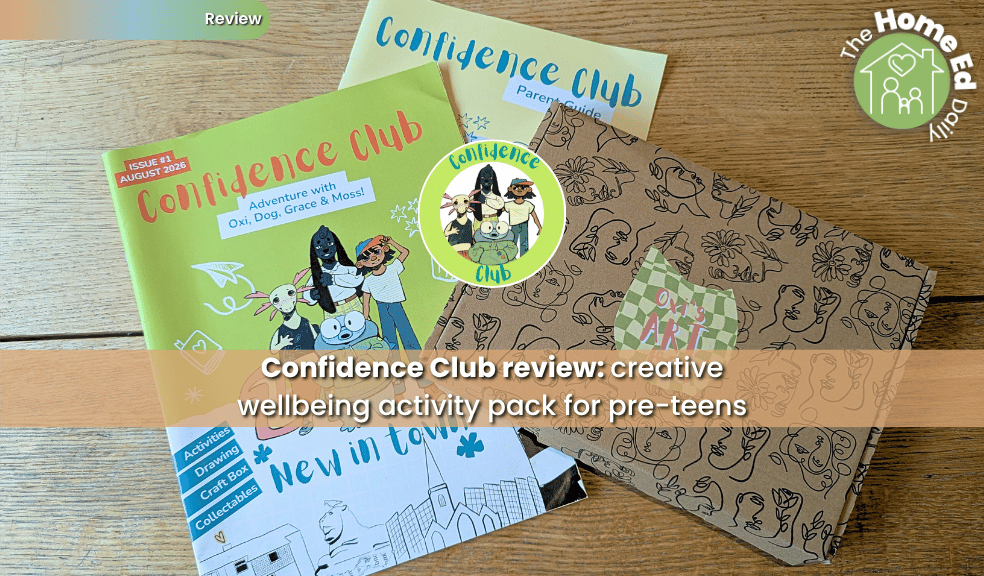
Confidence Club is a quarterly wellbeing activity pack for pre-teens, combining a story-led magazine, audio adventure, creative activities, nature, journalling and a hands-on craft box. I tried the first issue, New in Town, to see how well it might work for home educating families.
💚 Gifted review: Confidence Club sent me this pack to try so I could take a proper look and share my honest thoughts. This review is independent and unpaid, and all opinions are my own. I only feature resources on The Home Ed Daily that I genuinely believe are relevant and useful to home educating families.
There are some children’s wellbeing resources that look terribly worthy from three paces away. You know the sort. Lots of earnest worksheets about feelings that have somehow managed to remove every last bit of joy from actually having them. Confidence Club isn’t that. This is bright, funny, creative and slightly quirky, with the feel of a really good independent magazine crossed with an activity box. There are stories, puzzles, art, music, nature, journalling, a proper craft project and plenty of conversations quietly tucked in between them. And, perhaps most importantly, it doesn’t look babyish.
Confidence Club is created by South West social enterprise Big Sis CIC. It has grown out of their work with children and young people around confidence, relationships, growing up and wellbeing. The team says the packs are developed by Youth Relationships Educators, designed and tested with young people, and each new edition explores a different aspect of growing up.
What is Confidence Club?
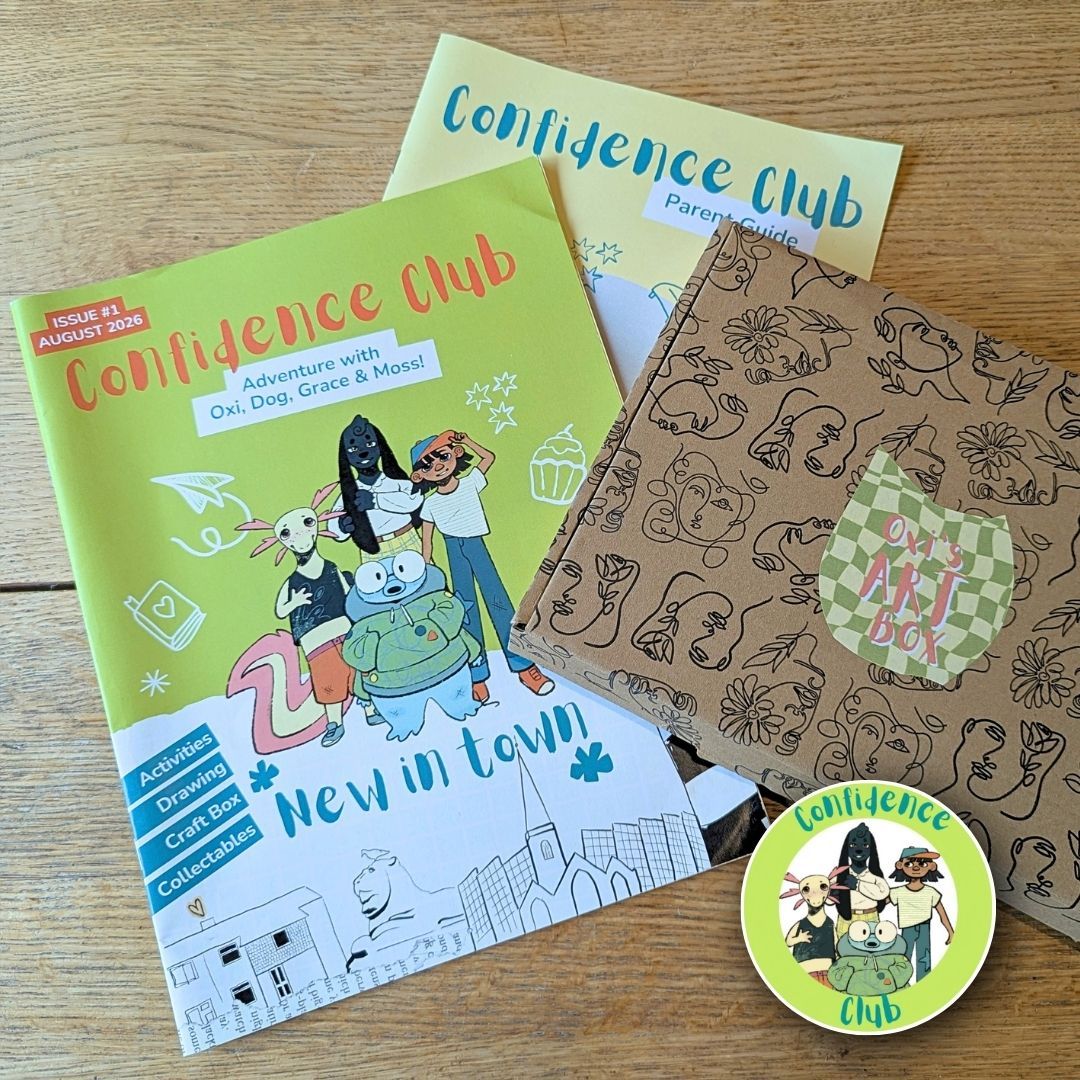
Confidence Club is a quarterly activity pack aimed officially at young people aged 7 to 13. Each edition combines a 30-page activity magazine, an audio adventure, a hands-on craft box, a parent or carer guide and a few extra surprises. The Big Sis website describes it as a way of helping young people explore friendships, feelings, emotional changes, resilience and growing up without making those subjects feel overly clinical or heavy. Four editions are planned each year.
The first issue is called New in Town, and follows four characters called Grace, Dog, Oxi and Moss. Grace has just moved to a new city and started somewhere new. Through the story, the group deal with things such as friendship, anxiety, feeling different, being brave, empathy and making other people feel welcome.
The themes listed for this first edition include belonging, being new, making friends, school transition, anxiety, empathy and recognising the differences that make people unique. It sounds potentially quite earnest written down like that. In reality, it’s much more fun.
First impressions
This is a genuinely lovely thing to open. The design immediately stood out to me. It has a scrapbooky, collage-like feel with bold colours, hand-drawn illustrations, bits of torn paper, photographs, scribbles and odd little details scattered through the pages. It manages the rather difficult trick of being cute without looking twee.
The characters are especially good. They’re distinctive enough to feel like actual personalities rather than generic cartoon children designed to demonstrate emotions. They have different interests, families, backgrounds, likes, dislikes and things they find difficult. Oxi loves art, manga and snacks and hates eye contact and loud hand dryers. Moss loves nature, is dyslexic and sometimes feels low. Dog loves self-care, cooking and Taylor Swift. Grace loves fancy dress and football and has a habit of saying exactly what she thinks. There’s representation here, but it doesn’t feel bolted on. It’s simply part of their lives.
I also think the visual style gives Confidence Club a wider age appeal than the official 7 to 13 range might suggest. Personally, I could imagine some teenagers through to perhaps sixteen enjoying it, depending very much on the individual young person. It doesn’t read as strongly gendered either, which I liked. The content itself is probably most naturally pitched towards the pre-teen years, but visually it doesn’t immediately announce itself as something for little children.
There’s a proper story running through it
Rather than presenting a pile of unrelated wellbeing exercises, the pack follows an adventure. The story is split into short sections across nine chapters, beginning with Grace arriving somewhere new and gradually bringing the four characters together. QR codes link to audio sections, generally only a few minutes long, so children can listen as they work through the magazine. The story can also be read, making it more flexible for children who aren’t particularly keen on audio. Big Sis describes the complete audio adventure as around 40 minutes long.
I liked this approach because the activities have a reason to exist. You aren’t suddenly being instructed to complete an empathy worksheet because an adult has decided it would be character-building. You’re helping Grace work through something that has happened in the story, wondering what another character might feel, creating something alongside Oxi or heading outdoors with Moss. That tiny shift makes a surprisingly big difference.
The activities are really varied
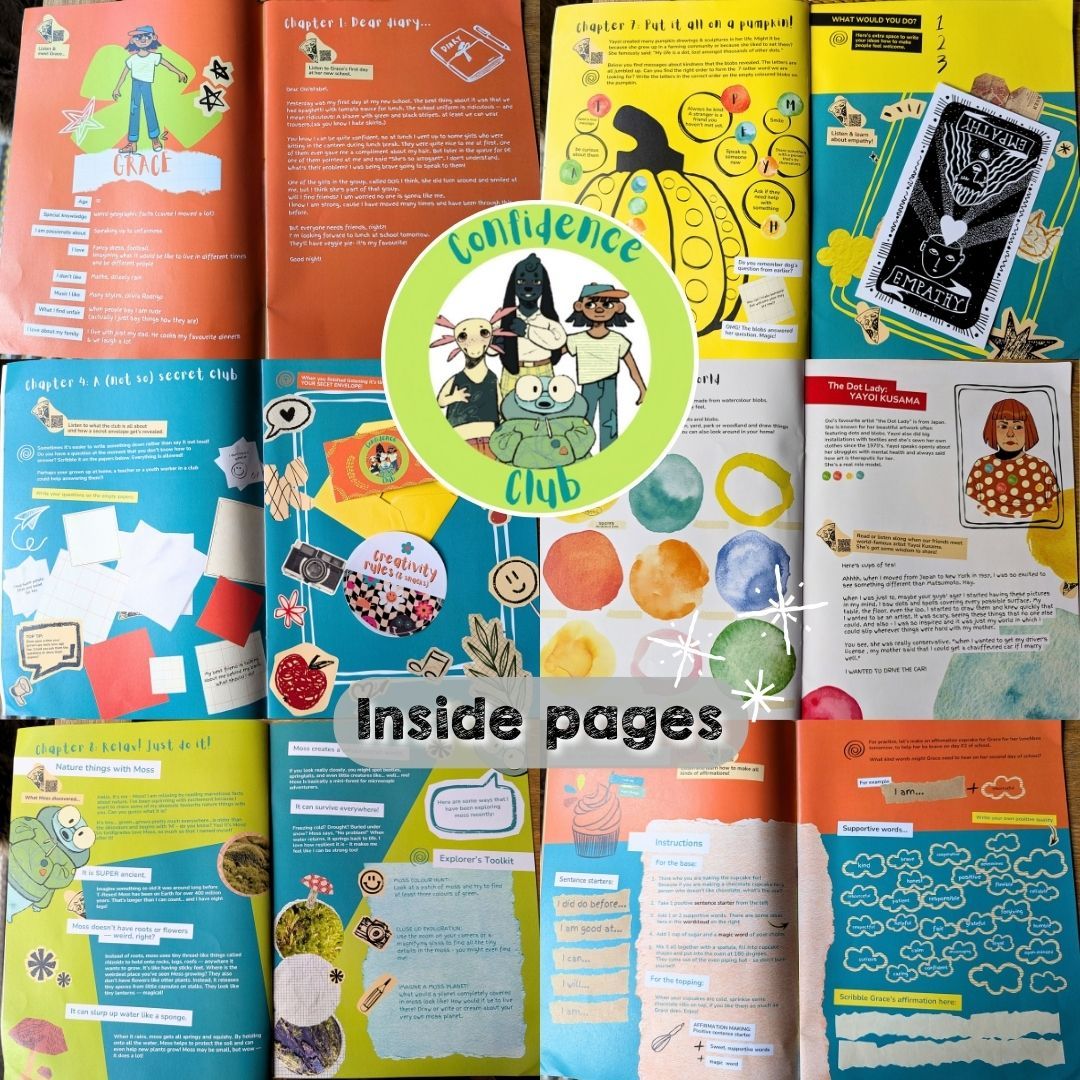
This was probably my favourite part. There are 16 activities scattered through the magazine and they’re not all variations on writing down your feelings. There’s an affirmation activity presented as creating an imaginary cupcake recipe. There are doodling pages, puzzles, questions, journalling, a secret envelope, a kindness and empathy activity, an outdoor observation activity, calming ideas and a little maths puzzle hidden among the pages.
One section introduces Japanese artist Yayoi Kusama and explores dots and pattern before moving into a Hirameki art activity, where children turn colourful blobs into whatever they can imagine. Another section is devoted to moss, with nature facts and an explorer’s toolkit encouraging children to go outside, investigate moss closely, find different colours and imagine an entire moss-covered planet.
There’s even a playlist. It includes everything from The Beatles and The Smiths to Little Boots, Justice, Gigi Perez and Anna von Hausswolff, which might be the first time I’ve encountered a children’s wellbeing resource with a genuinely interesting soundtrack.
The whole thing feels refreshingly unpredictable.
The craft box is excellent
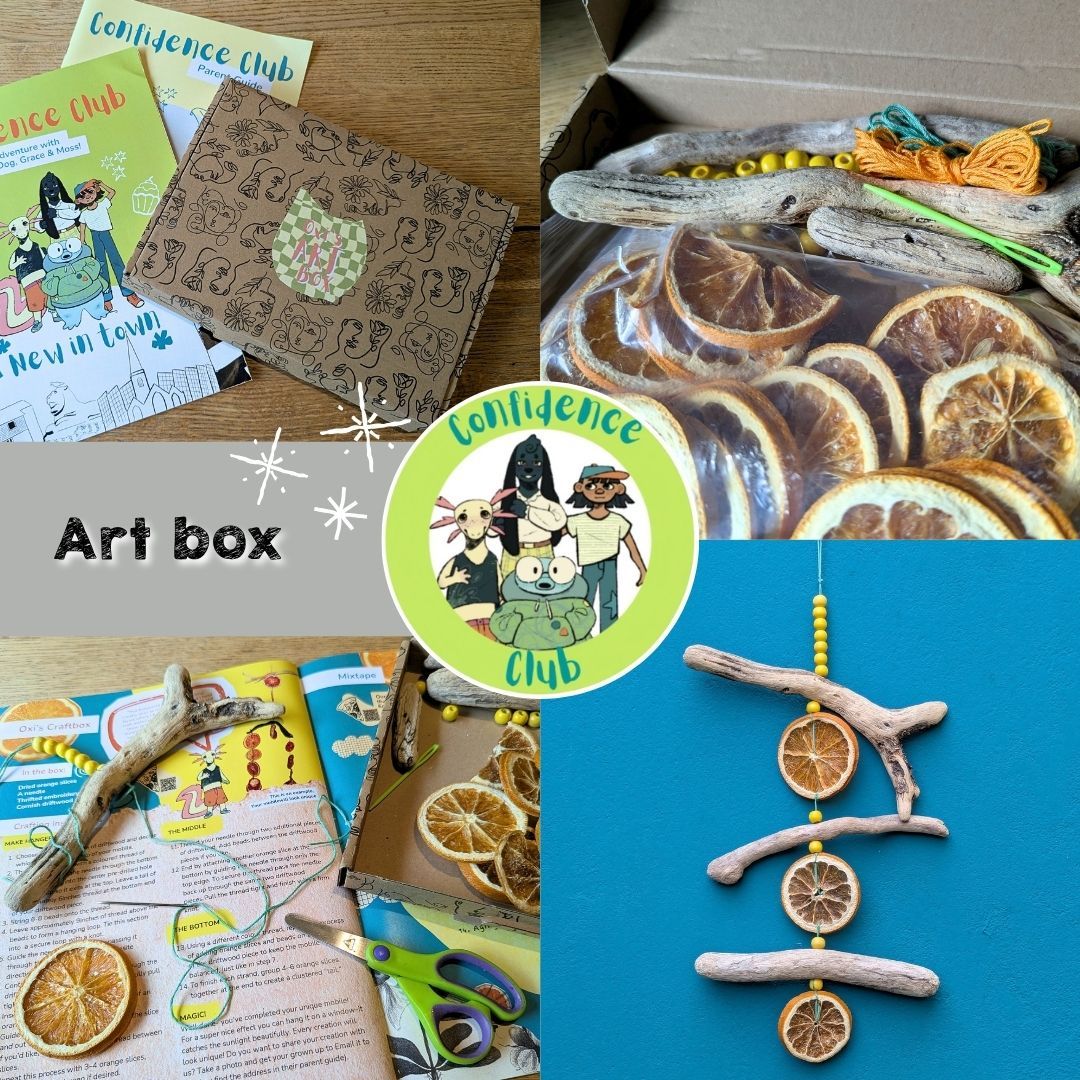
Then there’s Oxi’s Craftbox. And I absolutely love this. This edition comes with dried orange slices, driftwood, beads, embroidery thread and a needle to make an orange and driftwood hanging mobile. We did need to use a metal needle though, as the enclosed plastic one didn't fit through the driftwood holes. You can see our finished mobile in the picture below.
It isn’t a tiny token craft involving three stickers and a piece of card. It’s a proper project with lovely tactile materials and something you might actually want hanging in your home afterwards. The driftwood in my box is Cornish, the embroidery thread is thrifted, and every finished mobile will inevitably look slightly different because of the natural materials.
For me, this is one of the things that makes the £23.99 price make rather more sense. You aren’t only buying a magazine. You’re getting the printed pack, story, activities and the materials for a substantial craft project together in one box.
I would have been delighted to receive this through the post as a child. Frankly, I was quite pleased to receive it through the post as an adult.
The parent guide is useful without hovering over everything
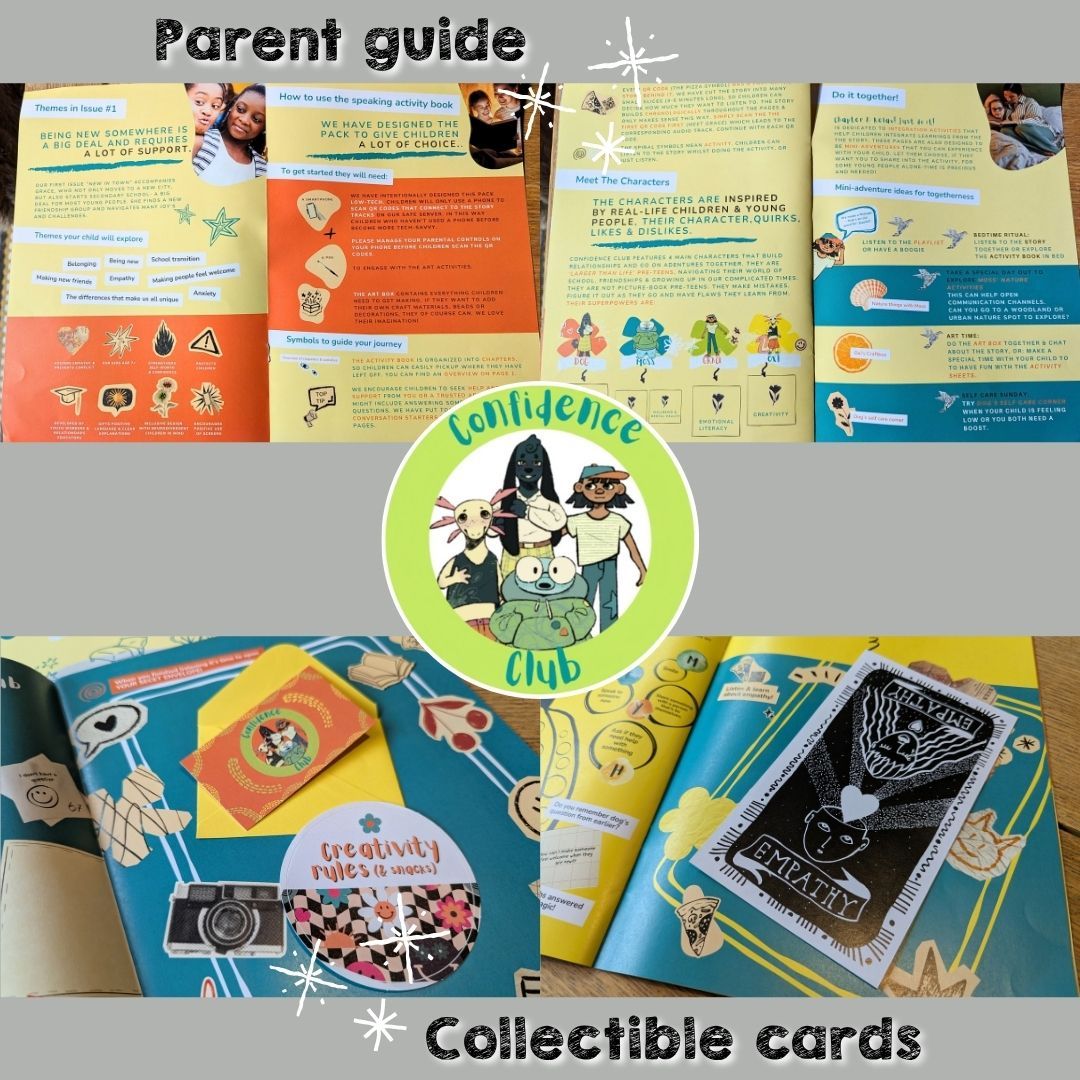
There’s a separate parent and carer booklet explaining what the pack is trying to do and offering conversation starters. Big Sis makes it clear that children can work through Confidence Club independently or alongside an adult. That feels important.
The parent guide encourages you to join in where useful, but there’s no suggestion that every activity needs to become A Meaningful Family Discussion. There are simple ideas such as listening to the playlist together, doing the craft, exploring somewhere outdoors, reading part of the story at bedtime or using one of the questions as a starting point.
The guide also explains that the original Confidence Club work has involved listening to children and young people’s own questions. According to the booklet, the team has collected more than 1,000 questions through its clubs and workshops. You can feel that child-centred approach in the finished resource.
Is it suitable for home education?
Yes, with one fairly important caveat. Confidence Club hasn’t been written specifically for home educating families.
The story in New in Town begins with Grace starting a new school. There are references to school uniform, the canteen, classmates and preparing for her second day at school. For plenty of home ed children that won’t matter at all. The underlying experience is much broader: being new somewhere, approaching a group of people you don’t know, wondering whether they’ll like you, finding your place, dealing with anxiety and learning how to make somebody else feel welcome. Those situations happen at home education groups, clubs, classes, activities and everywhere else children meet people. It could actually be useful for a child joining a new home ed group or moving into a different social circle. But children with very negative experiences of school may find some of the first issue less relatable, or simply not want to engage with a story framed around school. That’s worth knowing before buying this particular edition.
Future issues will cover different themes. Big Sis says Issue 2, Wonky Bits, is due in February 2027 and will look at body image, body neutrality, puberty, self-expression, friendship conflict and identifying unhealthy messages about bodies.
A few things to bear in mind
Confidence Club is quite visually busy. That is a large part of its appeal, and I love the design, but children who strongly prefer uncluttered pages may find some spreads a bit full-on. Some of the text is also fairly small and mixed with handwritten-style fonts. A few of the QR codes took a while to capture due to the amount on the page around them.
There’s plenty of choice, though. One of the things the parent guide repeatedly emphasises is that children don’t need to do everything. I think that matters with this sort of resource. The quickest way to turn something about confidence and emotional wellbeing into the exact opposite is to make a reluctant child complete every page in order.
Dip in. Skip things. Listen to the story without doing the activity. Do the craft and ignore the journal. Go and stare at moss for twenty minutes. That flexibility suits home education rather well.
So, what do I think?
I really like Confidence Club. It’s thoughtful without being solemn, genuinely creative and visually one of the nicest resources of this sort I’ve seen for the pre-teen age group. I particularly like the mixture of emotional literacy with art, nature, storytelling and ordinary fun. Children aren’t constantly being asked to analyse themselves. Sometimes they’re drawing blobs, listening to music, solving a puzzle or threading dried oranges onto driftwood.
And perhaps that’s why the more reflective parts work. They’re part of something enjoyable rather than the whole point of it.
Issue #1 is currently £23.99 as a one-off purchase, with annual subscription options available for the four quarterly editions.
It won’t suit every child, particularly those who might be put off by the school setting of this first story. But for creative children who enjoy magazines, stories, crafts, doodling, nature and discovering things in their own way, there is an awful lot here.
And yes, if a box looking like this arrived with my name on it, I’d absolutely want to know what was inside. That’s a pretty good place for a children’s resource to start.