




Keeping curiosity and creativity at the heart of home education
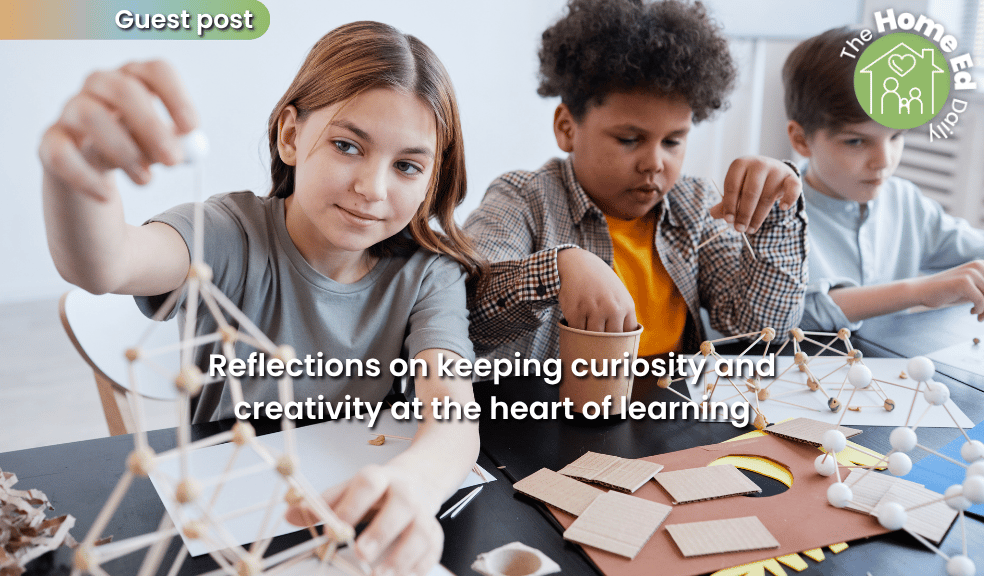
A beautiful mess: reflections on keeping curiosity and creativity at the heart of learning
How passion-led projects can bring subjects together through real-world learning
As a home educating parent of twenty years, and now CCO of Cresconova Labs, I’ve watched ideas about curiosity-led learning play out in real life. I started as many parents do, with subjects kept separate: time for maths, time for humanities, time for science. That felt too structured, so I tried unschooling instead, and that felt too loose. Like the three bears, I needed something that felt just right, and I found it by looking back at my own education. At university, I spent days in art studios chasing one idea for as long as it took. That was what I wanted for my children too. Not studios exactly, but a passion-driven education that allowed them to follow what interested them and build multidisciplinary experiences around wherever that interest led. They had constant access to cardboard, glue guns, craft sticks and the recycling bin, with the freedom to turn any of it into whatever an afternoon called for.
At the time, I was also running a robotics company and teaching students at a local makerspace, and my own children were often right there alongside me while I worked. It strengthened a belief I already had: there is no such thing as failure, only iteration. Not long ago, I mentioned that idea to my middle son, telling him about an article I had read about “getting things wrong” as part of how children learn. He said he had never really thought of it that way. For him, it was never about being wrong. It was about creating and iterating: building one version, testing it, then building the next.
That is simply what he does now, studying cyber security at university, where his creativity shows up in code, writing and research. But before it was code, it was toothpicks. At five, he spent his time going through books on knights and castles, building trebuchets and bows, and making toothpick arrows for elaborate castle sieges. He adjusted fortresses, counterweights and draw length again and again until each build worked the way he wanted it to. Nobody called that engineering. It was just a boy with a plan. For me, that is the heart of design thinking and systems thinking: real understanding that grows from noticing what does not work, making changes and trying again.
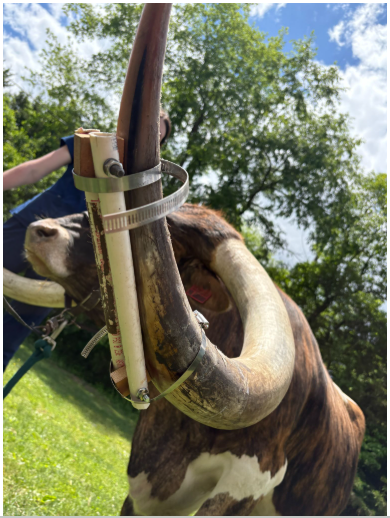
My youngest is another clear example of this habit of mind. He’s now on a pre-veterinary course and recently sent me a photo from an internship of a splint he had helped build for a Texas Longhorn, made from wood, bolts, PVC pipe and ring clamps. I looked at that photo for a long time because I could see his six-year-old self sitting at our kitchen table, absorbed in a cardboard box, a length of string and a stuffed toy fish.
 He has always loved animals, and that love shaped so much of what he learned. After spotting a snake in the garden wall, he built a trap so that he could study it without harming it. He rigged a box with PVC pipe, a string trigger and a toy fish as bait, then waited patiently for days, adjusting the mechanism each time it failed to close properly. That trap involved research, mechanics, biology and physics. He had to think about how much tension the trigger needed, where a snake might want to go, and how to close the box safely. From there, he moved into 3D printing and then into designing simple prosthetics for pets. They were small solutions to real problems, and solving them meant learning enough about anatomy to model around a living body.
By the time he was standing in a field with a Texas Longhorn, building a splint out of whatever the moment required, he was not really doing anything new. He was doing exactly what he had done with a shoebox and a toy fish: looking closely at a living creature, working out what it needed, and building something with what was available.
What I watched my children move through, over and over again, was a cycle: notice something, dig into it, research how to solve the problem, adjust as each change reshapes the whole, and, given enough time, arrive at something that genuinely works. Not because anyone graded it, but because they cared enough to keep going. That cycle, from inquiry to design to systems thinking and refinement, is also part of the framework built into Cresconova Labs.
My goal has always been to give children the freedom to follow their own curiosity, with real materials, real tools and room to iterate. Subjects often begin to blend together naturally when a child is chasing a real problem. Along the way, a habit of mind can take hold: the willingness to look at a snake, a toothpick or a Longhorn bull and think, I can do something with this. That is what multidisciplinary, passion-led learning can help nurture: a flexible, creative mind that is ready to work with whatever the world actually hands them.

Christine Braun is a home educator, entrepreneur and Chief Creative Officer at Cresconova Labs. With 16 years’ experience in home education, she has developed a hands-on, curiosity-led approach to learning shaped by design, engineering and real-world problem-solving. Her work spans experiential learning, technology and creative innovation.