

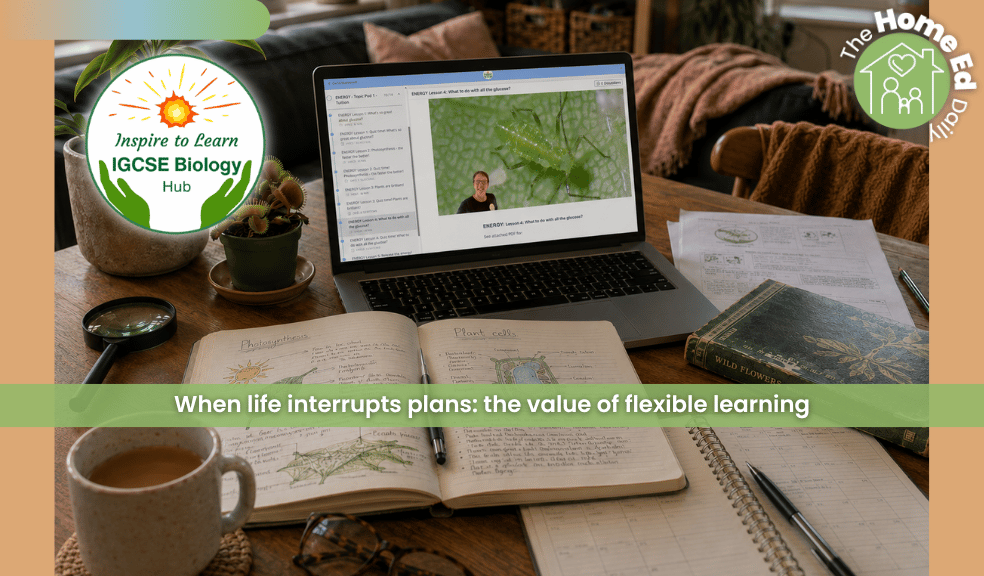
Sparking STEM IGCSE Biology Hub review: flexible learning when life interrupts
Why flexible online learning matters when family life changes.
Home ed does not always follow a neat schedule. Recorded biology lessons give families room to learn around real life.
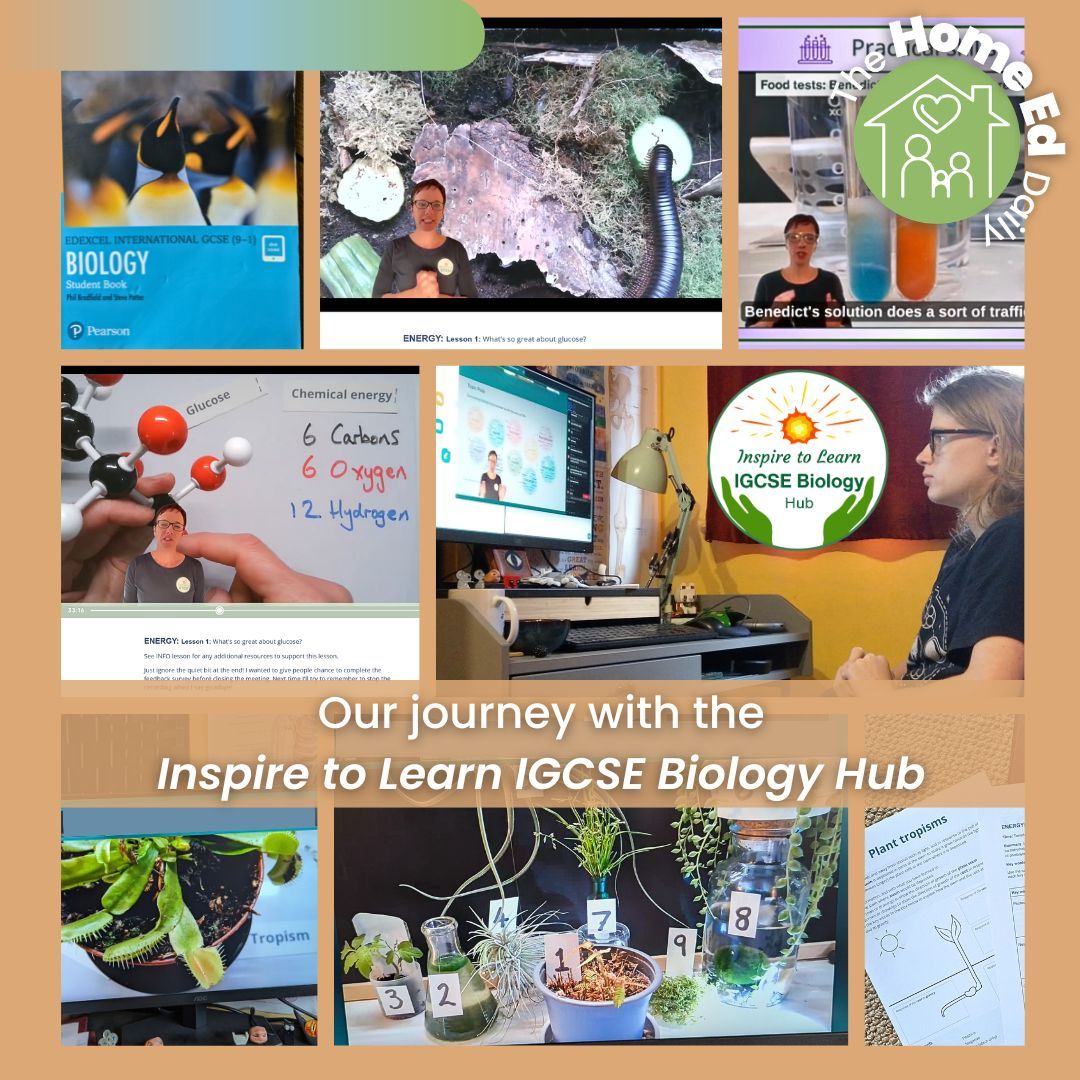 I missed our monthly June update about the Inspire To Learn IGCSE Biology Hub. The reason is quite simple. Life took over.
My husband had a mini stroke, on top of other family caring responsibilities, our cat had an accident, and our usual routines disappeared almost overnight. There have been hospital appointments, practical arrangements, worry, exhaustion and a great deal more to think about than biology lessons. And let's not forget the heatwave...
We have not been able to attend the last few live sessions. I explained the situation to Amanda, who was incredibly understanding and sympathetic. There was no pressure to catch up immediately and no sense that we had somehow failed by needing to step away.
That experience has brought one of the Hub’s biggest strengths into much sharper focus. It can fit around real family life.
Transparency note: O receives free access to the Inspire To Learn IGCSE Biology Hub in exchange for our honest updates. I retain full editorial control, this is not an affiliate arrangement, and I receive no payment if readers join. We have used Sparking STEM for many years, so this collaboration grew from our genuine experience of Amanda’s teaching.
Home education rarely follows a perfect timetable
Home education gives families flexibility, but that does not mean life is always leisurely or easy to organise.
There are illnesses, appointments, work commitments, caring responsibilities and periods when a child simply does not have the capacity for formal learning. Sometimes the whole family needs to stop and concentrate on getting through what is directly in front of them. That is what has happened here.
In a course built entirely around attendance, missing several sessions could leave a student feeling lost. It might create a growing pile of work labelled “catch-up”, which is rarely the most inviting way to encourage an avoidant teenager back into learning. The Biology Hub works differently.
Every live session is recorded and added to the Hub, along with its accompanying resources. We have not lost the lessons we missed. They are still there for O to watch when life settles and he feels ready to return. We can pause. We can rewind. We can spread one session across more than one day. We can use the worksheets now or leave them until later. There is no need to pretend our family circumstances have followed a tidy academic plan.
You do not really lose access to a lesson
The live tuition provides a useful rhythm for families who want to follow the programme week by week. Amanda teaches with demonstrations, real plants and animals, questions, activities and plenty of biological enthusiasm. However, the live session is not the only way into the learning. Recordings are available afterwards, meaning students can catch up in their own time. This may help families who:
- cannot attend every Tuesday
- join after the programme has started
- need to pause because of illness or family circumstances
- prefer recorded learning to live online sessions
- need regular breaks
- want to revisit a difficult topic
- are following a different exam timetable
O has enjoyed attending live, particularly when Amanda’s menagerie of insects and other creatures appears, but knowing that attendance is not all or nothing removes a considerable amount of pressure. We have missed some sessions. We have not missed our chance to learn from them.
More than recorded tuition
The Hub is not simply a folder of Zoom recordings. Membership includes six connected areas: live tuition and recordings, Biology is Everywhere videos, Practical Skills, Exam Skills, Maths Skills and a moderated community.
New material is added as the course progresses. This gradually creates a searchable collection of teaching, demonstrations, practical work, exam guidance and real-world biology. Students can use all of it or concentrate on the sections that suit them.
That freedom has mattered to us from the beginning. O is interested in biology, but wary of exams and particularly anxious about maths. We are not forcing every part of the programme at once. At the moment, the main priority is keeping him connected to the subject. The maths and exam skills materials will still be there when he is more ready to approach them. For another student, those sections may be exactly what they need now. The Hub can be used differently depending on the learner, their goals and their current capacity.
Joining after the course has started
Families looking ahead to September may assume they have missed the beginning and need to wait for a new intake. That is not the case.
The live programme began in April 2026, but families can join the Hub at any time and receive access to the material already added. The recordings and video libraries are organised so students can work through them in sequence. September is not a complete restart. A student joining then would have earlier material to catch up on if they wanted to follow the full course in order. However, they could do that at their own pace while continuing with the Hub.
The live sessions pause for part of the summer and resume in September with the next Topic Pod. That makes this a useful time for families to look through the programme, consider how it might fit their plans and decide whether they would prefer to follow the live teaching or mainly use the recordings. Home educators do not necessarily organise their lives around school terms. Still, the end of summer often becomes a natural planning point, particularly for families approaching GCSE or IGCSE-level study.
Studying IGCSE biology without promising to sit the exam
O is still not committed to taking the IGCSE exam. I remain open to the possibility that he may change his mind as his knowledge and confidence grow. Equally, he may decide that sitting the exam is not right for him. Being part of the Hub allows him to study biology at IGCSE level without having to make that decision now.
The course focuses on the Pearson Edexcel International GCSE Biology specification, with exam skills and techniques woven through the teaching. It can therefore support students who are firmly working towards the qualification. But the biological understanding, demonstrations and real-world content also have value beyond the exam. For O, the qualification remains an option rather than an expectation. That distinction is important. He works far better when curiosity has room to grow without a fixed outcome looming over him.
What our missed sessions have taught me
This was not the monthly update I had planned to write. I would rather have been reporting back on the latest demonstrations, quizzes and things O had learned. Instead, our experience this month has been about not participating.
Oddly, that has still told me something useful about the Hub.
A genuinely flexible resource should remain useful when a family cannot keep up. It should not turn a difficult few weeks into an academic debt that must be repaid before learning can become enjoyable again. The recordings mean that we can return without panic. Amanda’s response has also reinforced that the low-pressure ethos is not simply wording on a sales page. When our circumstances became difficult, she treated us as people first. That matters.
Try the Hub for £1
Families who are curious but unsure whether the format will suit their child can currently explore the Hub through a £1 one-day trial. The trial gives access to the Hub for a day, without starting a subscription. There is no ongoing commitment and nothing to cancel. One day will not tell you everything about how a young person might settle into a long-term course, but it does give you a chance to look around the different sections, watch some of the available material and get a clearer sense of Amanda’s teaching style.
You can find current membership options, the £1 trial and full details through the Hub website.
If you are new to our series, my introductory article explains the structure of the Hub, Amanda’s approach and why we chose to try it.
Continuing in our own time
I do not know exactly when O will catch up with the sessions we have missed. That is the honest answer. For now, my attention is still needed elsewhere. When there is more room, we will open the Hub again and pick up from where we left off.
Home education is often described in terms of freedom, but sometimes its greatest value is simpler than that. It allows learning to wait while life needs us.
The biology will still be there.