


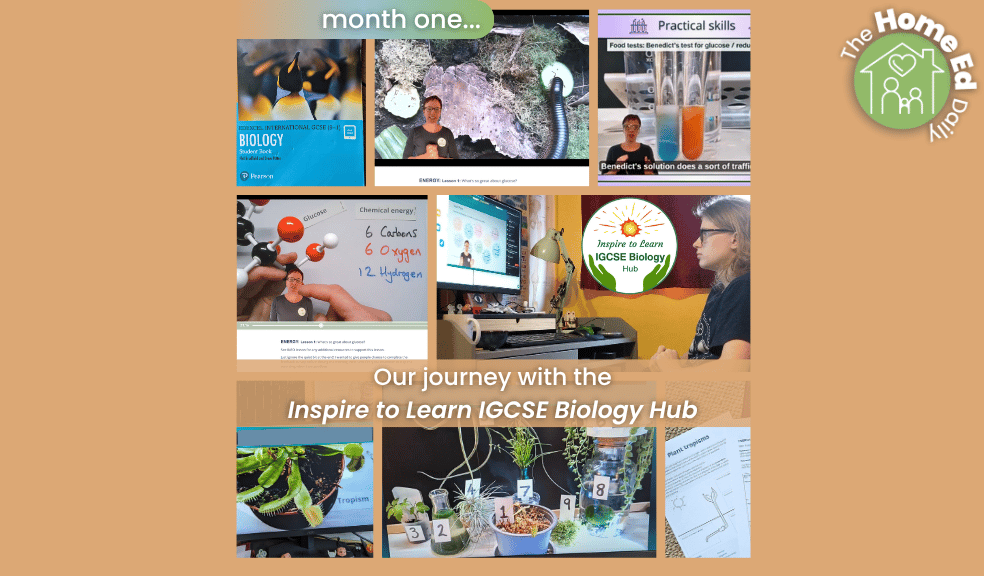
Inspire To Learn IGCSE Biology Hub review: our first month
Following our IGCSE biology journey. What we covered in April 2026.
We are now at the end of our first month using the Inspire To Learn IGCSE Biology Hub, so I thought it was time for our first update.
If you missed the introductory article (linked above), O is using the Hub as a home educated teen who is interested in biology, but not currently committed to sitting the IGCSE exam. That may change in time. It may not. For now, we are approaching it as learning first, qualification optional. And, so far, that low pressure approach is working well.
Transparency note: O receives free access to the Inspire To Learn IGCSE Biology Hub in exchange for our honest updates. I retain full editorial control, this is not an affiliate arrangement, and I receive no payment if readers join. We have used Sparking STEM for many years, so this collaboration grew from our genuine experience of Amanda’s teaching.
What we have covered so far
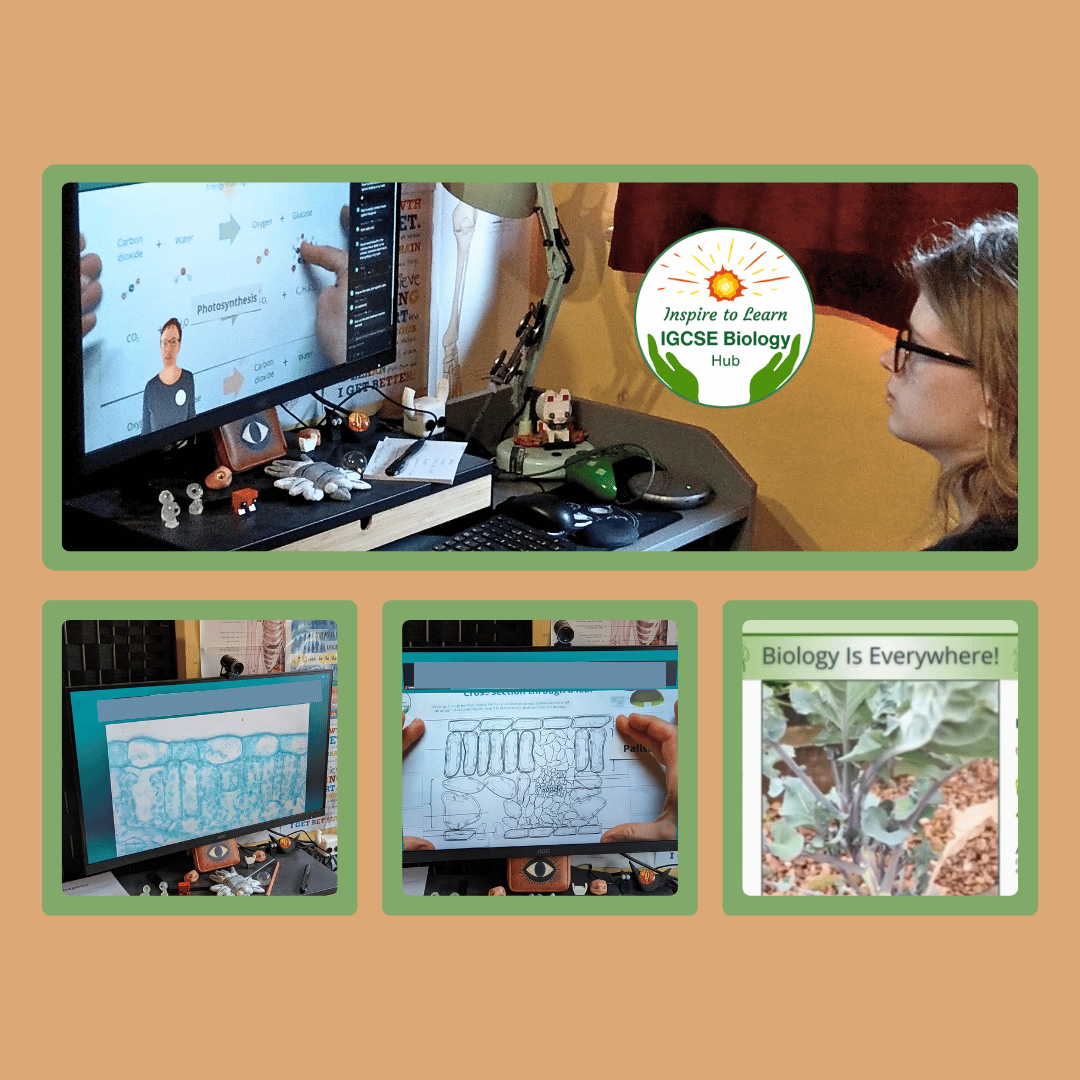
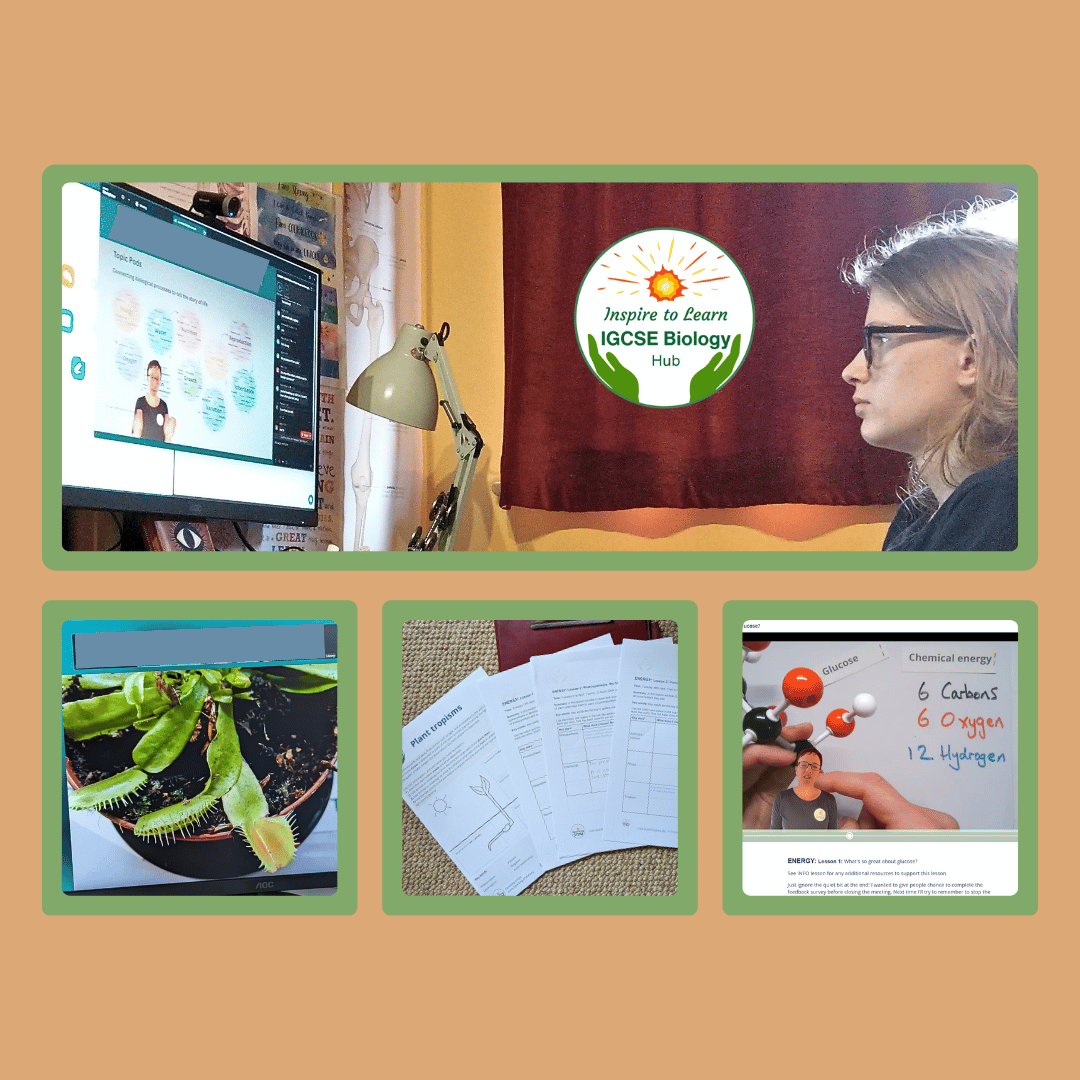
At the end of our first month, we have had three live sessions. The current topic block is energy, so we have been looking at plant cells, photosynthesis, energy, and glucose. It has been a good starting point because the ideas feel connected rather than dropped in as isolated facts.
One of the things I like about Amanda’s teaching is that she keeps linking the science back to real biological processes. It doesn't feel like biology as a list of things to memorise. It feels more like gradually building a picture of how living things work. O particularly enjoyed watching the Venus flytraps catching fruit flies, which is exactly the kind of small, memorable moment that helps learning stick.
We have also dipped into the Biology is everywhere section, watching short videos on things like photosynthesis with duckweed, and time lapse recordings of phototropism in action. These little real world links are one of the strengths of the Hub for us. They help biology feel alive, rather than something that only exists in a textbook.
The live sessions
The tech side has all worked smoothly for us so far. That may sound like a small thing, but anyone who has done online learning with a teen will know it matters. If the technology is clunky, distracting, or stressful, it can derail the whole thing before the learning has even started.
Amanda keeps the sessions calm and well managed. Chat issues are dealt with quickly, which helps avoid distractions. There are small opportunities throughout for students to answer questions or ask their own, but it does not feel pushy or high pressure. That matters for O. He can be avoidant when something feels too heavy or demanding, so being able to engage without being put on the spot makes a real difference.
Amanda has a calm, friendly manner and regularly asks for feedback. The tone of the sessions feels supportive rather than performative. There is space to take part, but no sense that a student has to suddenly prove themselves. O also prefers to keep his camera turned off, which is absolutely fine.
Recordings and catching up
The live sessions are recorded (no students are visible in these), which is very useful. This means students can catch up if they miss a session, join the Hub after the start of term, or revisit a topic that needs more time. I think this is one of the things that works particularly well for home ed.
There is no need to rush on just because the timetable has moved on. If something needs another look, the recording is there. If a child needs to pause, rewind, or come back another day, they can. That slower pace can make a big difference, especially for teens who need time to process new information.
Worksheets, quizzes, and the textbook
The printable worksheets have been clear and well explained. They support the live sessions without feeling overwhelming. We also managed to buy the recommended textbook secondhand for just £4, which was a small victory. I always appreciate it when home ed resources do not require a long and expensive shopping list before you can even begin.
O has been doing the quizzes and has done really well in them. Far better than me, if we are being honest! This has been lovely to see because quizzes can be a useful low pressure way to check understanding. They give a bit of feedback without the weight of a formal test. For O, that seems to be working.
What we have not used yet
We have not really explored the exam skills or maths skills sections - yet. This is mainly because O is very nervous and avoidant around maths. I do not want to rush that part. For now, I am letting him build confidence with the biology content first. The exam and maths sections are there when we are ready. That is enough.
The community chat area is also available, for students and parents, but we have not had a reason to use it yet. I can see how it could be helpful, especially for students who like asking questions or learning alongside others, but we are taking things slowly. That is one of the benefits of doing this through home education. We can use what is useful now and leave the rest until it feels more manageable.
How O is finding it
Overall, O is engaging well. He has zoned out now and again, particularly when there are a lot of keywords. That is to be expected. I do not see that as a problem, just part of learning at this level. IGCSE biology involves a lot of specific vocabulary. There is no way around that. But because the Hub keeps linking the terminology back to real processes and examples, it feels less like rote memorisation and more like building language around things he is beginning to understand.
For us, the most important thing is that he is willing to show up. That might sound small, but with an avoidant teen it is not small at all. He is attending the sessions. He is doing the quizzes. He is remembering things. He is interested enough to keep going. At this stage, that feels like a good start.
What stands out after the first month
The biggest strength so far is the balance.
The Hub has structure, but it does not feel rigid. It has exam awareness, but it does not feel exam obsessed. It offers live teaching, recordings, worksheets, quizzes, practical links, and extra videos, but we do not feel we have to use everything at once.
For families who want a clear path through IGCSE biology, that structure will be reassuring. For families like ours, where the exam is still uncertain, the same structure can still be useful. It gives shape to the learning without turning it into pressure. That is the part I appreciate most.
We are not trying to force a decision about the exam right now. We are simply seeing what happens when O has access to good teaching, interesting biology, and enough space to approach it in his own way. One month in, that feels like the right choice.
My thoughts after month one
So far, the Inspire To Learn IGCSE Biology Hub feels like a thoughtful, well run option for home ed students who want to study biology in a meaningful way. It is early days, of course. We have not yet tested how it works when topics become more complex, or when O has to face the maths and exam skills elements more directly. That will be part of the journey. But for now, the start has been steady, calm, and encouraging. And for a teen who is interested in science but wary of pressure, that matters.
At the end of next month (May), I will continue sharing how we get on, what helps, and what feels challenging. Hopefully it will be useful for other home educating families considering IGCSE science, especially those with teens who need structure, but also need room to breathe.
Read my Inspire To Learn IGCSE Biology Hub introductory article. That piece explains the Hub in more detail, including how it is structured, and the practical info.
Further information on the hub is available here.