




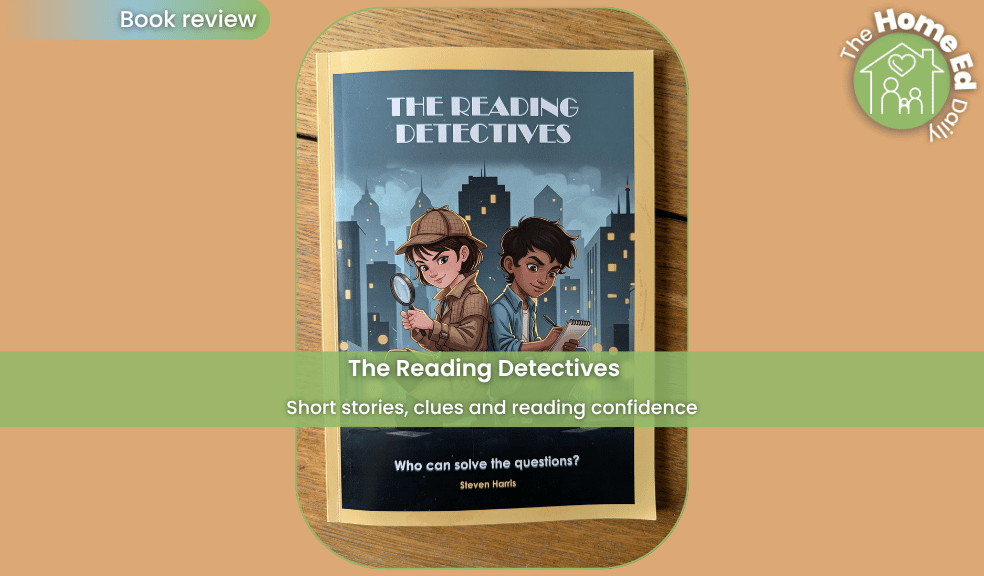
The Reading Detectives review: a shared reading book for curious children
A flexible reading resource for children who enjoy clues, questions and short stories.
The Reading Detectives review: short stories that make reading feel like solving a puzzle.
💚 Gifted review: This book was gifted to The Home Ed Daily for consideration. No payment was received for this review and, as always, all opinions are my own.
Reading confidence does not always move neatly by age. Some children read early. Some read later. Some can decode words but struggle to enjoy books. Some are strong readers but still prefer short, sharp texts. Some children freeze when asked to read aloud, but happily read alone when no one is watching. That is why I was interested in The Reading Detectives by Steven Harris.
Steven Harris is a teacher and freelance writer with a particular interest in youth culture and children’s fiction. His book is aimed broadly at children aged 7 to 12, but I would not treat that age range too rigidly. In home education, we know that ability, confidence and interest are not determined by age. A younger child may enjoy listening and joining in. An older child may still benefit from short, engaging reading tasks that do not feel heavy or patronising.
My teenager read the book independently and enjoyed it. When he was younger, I am sure we would have read it together, taking turns as the book suggests. This time, he chose to read it by himself. He made guesses for all but one of the stories, which tells me the format did what it set out to do. It made him think, notice and predict, rather than simply read from start to finish.
What is The Reading Detectives?
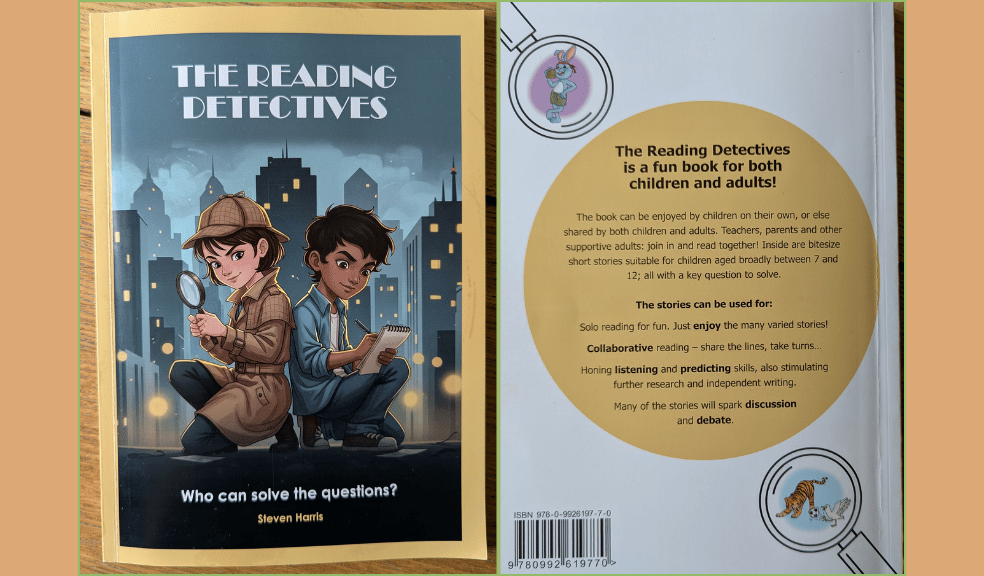
The Reading Detectives is a collection of short illustrated stories, most of which are written as conversations or interviews. Each story has a key question to solve, so the reader becomes the detective. The book can be read alone, but it is also designed for shared reading. One person can read the interviewer’s lines and the other can read the interviewee’s lines. This would work well with a parent and child, two siblings, or even a small home education group.
There are 20 stories in total. Stories 1 to 10 are easier reads, while stories 11 to 20 are more challenging. That makes the book flexible. Families can start where the child feels comfortable, rather than feeling they must begin at page one and work through in order. The introduction also suggests another way to use the stories. A child can listen to a story being read aloud, knowing only the key question beforehand, and then listen carefully for clues. I can see that working well for children who enjoy puzzles but are less keen on reading aloud themselves.
Why the detective format works
The strongest part of the book is the question-led format. Reading can feel very exposed for children who lack confidence. They know when an adult is listening for mistakes. They know when a book has been chosen because it is “good practice”. That pressure can flatten the joy out of reading very quickly. Here, the question gives the reading a purpose. The child is not just getting through a text. They are looking for clues. They are making guesses. They are trying to work something out. That small shift matters. It turns reading into noticing. It makes comprehension feel active. It also gives children a reason to pay attention beyond “because you need to practise”. My son made guesses for almost all of the stories, which was a good sign. He was engaged enough to play along. That is often half the battle with reading resources.
How home educating families could use it
For home ed families, I think this book could be used in several ways. It could be a gentle shared reading book for a younger child. It could be used with a reluctant reader who prefers short texts. It could sit beside English work without feeling too much like a workbook. It could be useful for a small group, especially if children enjoy taking roles and reading dialogue aloud.
You could also use one story as a springboard for further discussion or writing. Some of the sample questions ask children to think beyond simple recall. For example, they might be asked to explain a phrase, define a word, think about character, or discuss whether animals in real life deserve the reputations they have in stories. That kind of question can lead to proper conversation. Not forced comprehension, but actual discussion.
I can also see it being useful for children who are working on listening skills. The idea of hearing the question first, then listening for clues in the story, is simple but effective. It encourages focus without needing a long lesson.
The extra questions
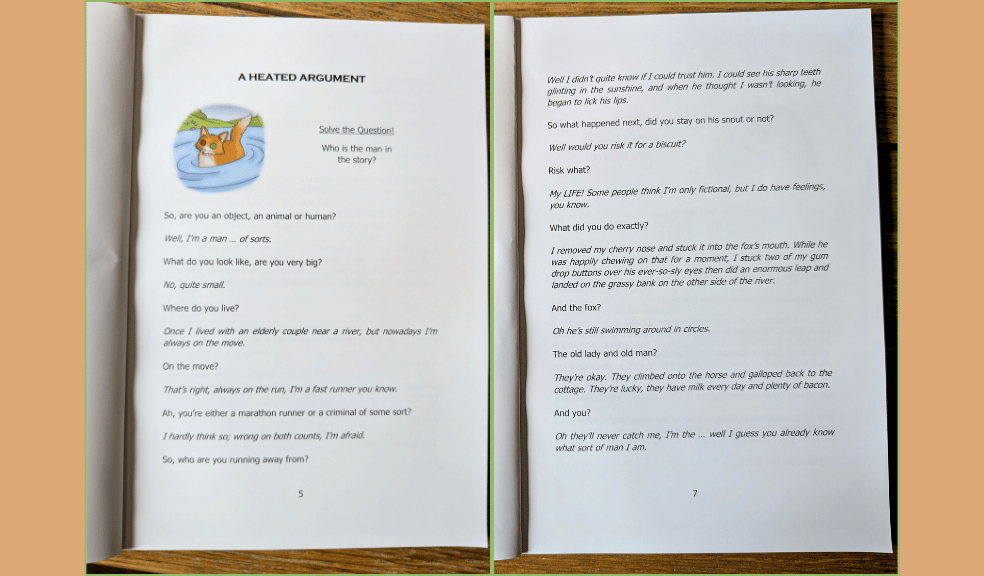
There are extension questions available for all the stories. A sample set for the first story, A Heated Argument, is included in the printed book.
The questions are divided into “Hot Questions” and “Hotter Questions”. The Hot Questions are more straightforward. They check understanding, memory and vocabulary. The Hotter Questions go further. They ask children to think about character, traditional stories, word meanings, sayings and wider ideas.
For example, the sample questions for A Heated Argument include simple recall questions such as who the small man lived with, alongside more thoughtful questions about the fox’s character and the phrase “You shouldn’t judge a book by its cover.” I liked this. The extra questions add value because they give adults a ready-made way to deepen the reading without having to invent questions on the spot.
My only small note is about access to the extra questions. The full set is available free by emailing Lewarne Publishing to request the download, and answers are provided too. I understand why these were not included in the printed book, as adding them would have made the book much longer and more expensive, especially with the generous font size and spacing.
From a parent’s point of view, I do think the questions add real value, so do download them. They deepen the reading and make the stories even more useful. A direct download link would make them easier to access, particularly for busy families who are more likely to use a resource when everything is close to hand.
What I liked
I liked that the book does not assume there is only one way to read. A child can read alone. An adult and child can share the parts. Two children can take turns. Someone can read aloud while the listener hunts for clues. Families can use the questions, or ignore them and simply enjoy the stories. That flexibility makes it more useful for home education than a resource that demands one fixed approach.
I also liked the short story format. Many children find long books daunting, especially if they have had difficult experiences with reading. Short stories can feel more achievable. There is a clear start, a clear finish, and a small puzzle to solve. The font and spacing are generous too, which helps the pages feel less crowded. That will matter for some readers.
Things to be aware of
This is an educational reading book, not a glossy chapter book or a highly illustrated fiction title. It has a clear purpose. Some children will enjoy that structure. Others may need it introduced lightly. I would not present it as “reading practice” unless you know that works for your child. I would be more likely to say, “Shall we try one and see if we can solve it?” That framing keeps the focus on the puzzle, not the performance.
The recommended age range is 7 to 12, but I would treat that as a guide rather than a rule. It may suit older children who need shorter, manageable texts. It may also suit younger children if an adult is reading with them. As always, the right fit depends on the child in front of you.
Who might enjoy The Reading Detectives?
I think The Reading Detectives could work well for:
- children who enjoy puzzles, clues and guessing games
- children who prefer short reading tasks
- children who like dialogue and role play
- children building confidence with reading aloud
- families looking for low-prep English ideas
- children who enjoy shared reading with an adult
- small home education groups
- older children who still benefit from accessible texts
It may be less suited to children who dislike anything that feels too structured, unless it is used very gently and without pressure.
Final thoughts
The Reading Detectives is a thoughtful, practical reading book with a simple but effective idea at its heart. It gives children a reason to read. It encourages them to listen, predict, infer and discuss. It can be used independently, but it also gives adults a natural way to read alongside a child without turning the whole thing into a test.
For us, it worked as an independent read for a teenager, which shows why age guidance should never be treated as a hard boundary. A book like this may be aimed at 7 to 12-year-olds, but its usefulness depends far more on reading confidence, interest and how it is offered.
Overall, I can see The Reading Detectives being a useful addition for home educating families who want short, engaging reading activities that encourage children to think, talk and solve. It is not about pushing through pages for the sake of it. It is about reading with curiosity. And for many children, that is a much better place to begin.
Book details
The Reading Detectives
Author: Steven Harris
Publisher: Lewarne Publishing
Available to buy here