The Children’s Wellbeing and Schools Bill has received Royal Assent. What happens now? The key message for parents.
The Children’s Wellbeing and Schools Bill has now received Royal Assent and is an Act of Parliament. The Bill completed its final parliamentary stages on Tuesday 28 April 2026 and received Royal Assent on Wednesday 29 April 2026. The Act is for England and Wales. Families in...
The industrial revolution and the birth of modern schooling: what history tells us about learning
For most of human history, children learned by taking part in life. They absorbed skills and knowledge through family life, apprenticeships, play, and community. Learning happened as they joined in with the real work of their world; watching, listening, experimenting, asking questions, and...
In England, play often gets treated as a nice extra, something squeezed in when the “real work” is done. But research, and decades of experience in home education, show that play is not a break from learning. It is learning. When we think of play, we often picture young children with building blocks or playground games. But the power of play...
A photo has been widely shared on Facebook recently. It suggests that ADHD is not simply a disorder, but a different kind of wiring. The sort of wiring that may once have helped humans survive in fast-moving, uncertain environments.
It is the kind of idea that catches people’s attention because, for many families, it feels true. Many of us know children who are constantly noticing...
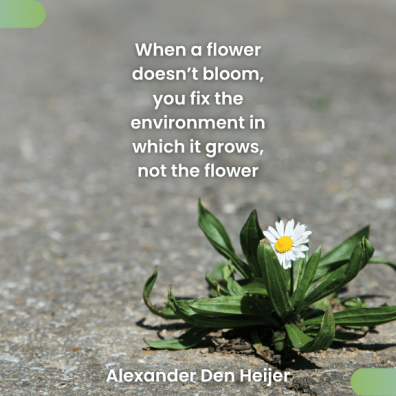
When a flower doesn’t bloom, you fix the environment in which it grows, not the flower – Alexander Den Heijer
So often, families come to home education after watching their child struggle to thrive in school. They’re told their child is behind, too distracted, too sensitive, too slow, too much. But what if the problem isn’t the child?
Learning doesn’t follow a straight line What I used to think learning should look like: Workbooks. Steady progress. Timetabled ‘learning’. Educational apps. A clear beginning, middle, and end. What does it actually look like? Messy bursts of curiosity. Half-finished projects. Sudden leaps after long lulls. Ideas that spark, fade, and sometimes return months later - or not at all.
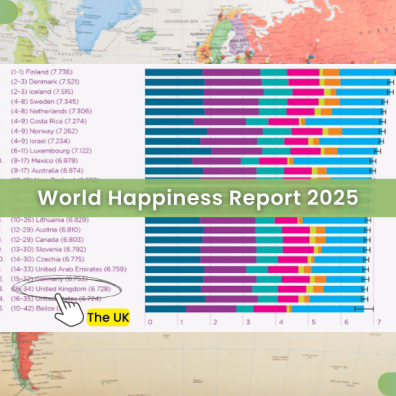
Once again, Finland, Denmark, and Iceland top the World Happiness Report this year , with the UK ranking significantly lower at 23rd place .
While many factors contribute to national happiness, one recurring theme among the highest-ranking countries is education . Could the UK’s exam-driven, high-pressure school system be the reason? I think so.
What did you learn at school today? By Naomi Fisher
School isn't the only way to get an education, and the school way isn't the only way to learn. In fact, some of the skills we need at school are quite different to the skills we need in order to direct our own learning.
This table from my new book contrasts some of the skills we need to do school 'well' with the...
How Do Children Learn When They Don't Go to School? By Naomi Fisher
Most people have no idea what child development and education looks like outside school when young people have autonomy. I've been told that children will endlessly move from whim to whim, or that they'll never learn to set goals or work hard. Here's what actually happens.