


Articles

Children’s Wellbeing and Schools Act 2026: what changes for home education now?

Children’s Wellbeing and Schools Act 2026: what changes for home education now?

The Children’s Wellbeing and Schools Bill has received Royal Assent. What happens now? The key message for parents.

The Children’s Wellbeing and Schools Bill has now received Royal Assent and is an Act of Parliament. The Bill completed its final parliamentary stages on Tuesday 28 April 2026 and received Royal Assent on Wednesday 29 April 2026. The Act is for England and Wales. Families in Scotland and...

Play is not a break from learning, it is learning.

Play is learning: why play fuels education for children of all ages

Learning through play: From early years to teens

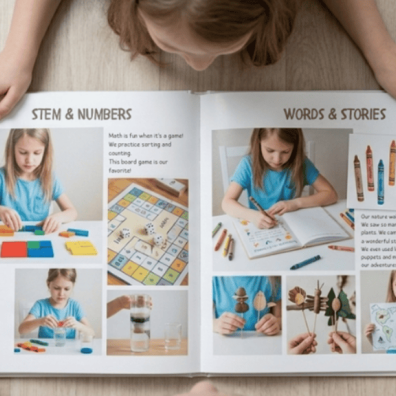
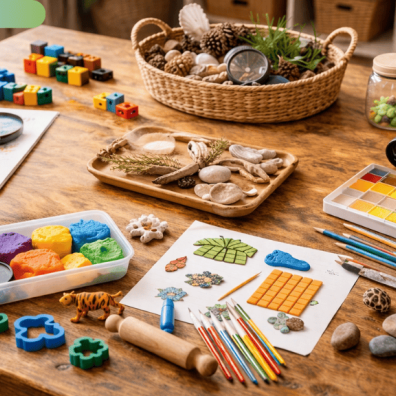
In England, play often gets treated as a nice extra, something squeezed in when the “real work” is done. But research, and decades of experience in home education, show that play is not a break from learning. It is learning. When we think of play, we often picture young children with building blocks or playground games. But the power of play...

Stop calling home educated kids ‘invisible’: why these children aren’t missing

The myth of invisible children: why home educated children are being misrepresented

Home educated children are not “ invisible ”: why being out of school is not being at risk.

In recent years, a troubling phrase has crept into media headlines and government discussions about elective home education: “invisible children”. It’s used to describe children who are not in school, as though being outside the school system means they are unseen, unknown, or at risk. The implication...

ADHD, hunter-gatherers, and education: why the system isn’t built for our brains

ADHD and home education: when the environment matters

A photo has been widely shared on Facebook recently. It suggests that ADHD is not simply a disorder, but a different kind of wiring. The sort of wiring that may once have helped humans survive in fast-moving, uncertain environments.

It is the kind of idea that catches people’s attention because, for many families, it feels true. Many of us know children who are constantly noticing...

When a flower doesn’t bloom, you fix the environment in which it grows, not the flower.

Home education: changing the environment, not the child

When a flower doesn’t bloom, you fix the environment in which it grows, not the flower – Alexander Den Heijer

So often, families come to home education after watching their child struggle to thrive in school. They’re told their child is behind, too distracted, too sensitive, too slow, too much. But what if the problem isn’t the child?

This quote speaks right to the heart of it....

Disobedience, in the eyes of anyone who has read history, is man’s original virtue

Home education as a quiet act of courage

Oscar Wilde wrote: “Disobedience, in the eyes of anyone who has read history, is man’s original virtue. It is through disobedience that progress has been made, through disobedience and through rebellion.”

It is a powerful line. And for many home educating families, it lands somewhere deep. Because many of us come to home ed through a quiet act of disobedience. Not the loud, reckless kind. Not...

What real learning looks like: letting go of school-like expectations

What real learning looks like: letting go of school-like expectations

Learning doesn’t follow a straight line What I used to think learning should look like: Workbooks. Steady progress. Timetabled ‘learning’. Educational apps. A clear beginning, middle, and end. What does it actually look like? Messy bursts of curiosity. Half-finished projects. Sudden leaps after long lulls. Ideas that spark, fade, and sometimes return months later - or not at all.

Growth isn’t...

Stealth learning ideas: Turning play into education

Stealth learning ideas: Turning play into education

Favourite family board and card games | How playing can teach more than worksheets

Ever watched your child completely absorbed in a game - laughing, problem-solving, working things out, and realised they were learning without even noticing? That’s stealth learning . Also known as hidden education, it’s about weaving learning into activities that feel nothing like school. No pressure, no...

Battersea House online tutoring

Supporting neurodiverse learners at home: a personalised approach to education

When I first began working with home-educating families, I was struck by how many parents described the decision as both daunting and deeply necessary. For those raising neurodiverse children, the choice often stems from a desire to prioritise wellbeing—after witnessing their child struggle with anxiety, overwhelm, or a lack of understanding in school settings.

Again and again, I’ve...

Stop the Children’s Wellbeing and Schools Bill: Protests Across England

Stop the Children’s Wellbeing and Schools Bill | Protests Across England

Families across England unite to oppose the Children’s Wellbeing and Schools Bill

On Sunday the 13th of July, families, educators, and allies gathered in towns and cities across England to protest the proposed Children’s Wellbeing and Schools Bill , a controversial piece of legislation that many believe would harm, not help, young people. The bill is being presented as a measure to improve...

How Do Home Educated Children Socialise? | The Myth of Homeschool Isolation

How Do Home Educated Children Socialise? | The Myth of Homeschool Isolation

Do you worry about socialisation? Home educated children thrive through hands-on experiences and mixed-age friendships - learning together, not just side by side.

But how do they socialise?

It’s one of the most common questions we get - and one of the most frustrating myths about home education: that our children must be lonely or isolated. It usually comes from a kind place (...