





UK social media ban for under-16s: what it could mean for home educating families
What the under-16 social media ban could mean for home educated children
A social media ban for under-16s: protection, panic, or a missed chance to make tech safer?
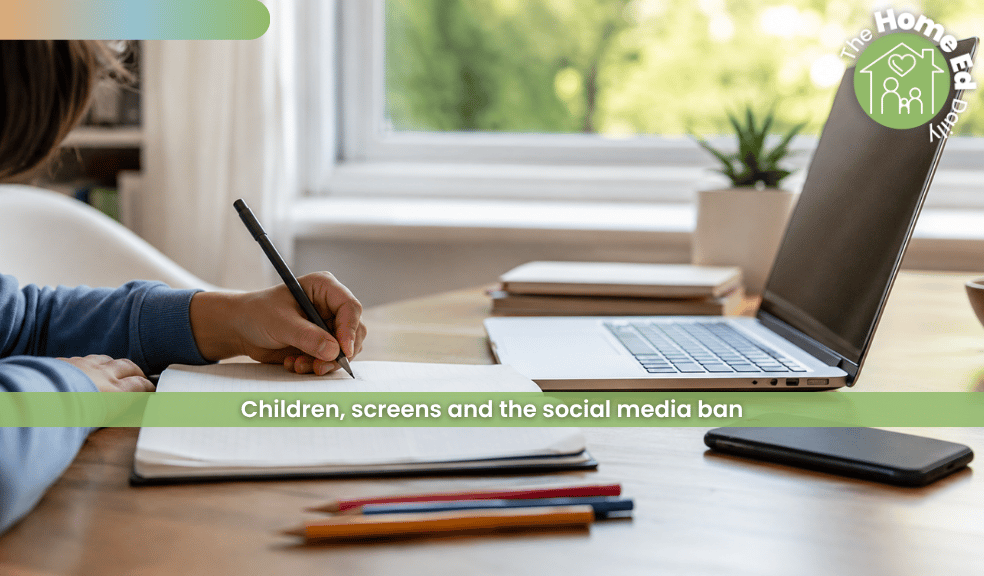
The UK government has announced plans to ban under-16s from using certain social media platforms from spring 2027. The plan is being presented as a way to protect children from harmful content, addictive design, stranger contact, livestreaming risks, online pressure and the endless scroll that many parents will recognise all too well. It is not hard to understand why many families feel relieved by the idea. Children are growing up in an online world that can be wonderful, useful, funny, creative and connecting. It can also be harsh, exploitative, overwhelming and unsafe. The difficulty is that both things are true.
A ban may sound simple. Real family life is not.
What is being proposed?
The UK government says under-16s will no longer be able to use certain social media platforms. The exact list has not yet been finalised, but government information has mentioned platforms such as TikTok, Snapchat, Instagram, Facebook, X and YouTube. Messaging services such as WhatsApp and Signal are not expected to be included.
The government also says the UK approach will go further than Australia’s model by restricting certain high-risk features for children, including livestreaming and stranger communication on wider online services such as gaming platforms. For 16 and 17-year-olds, some of these safety settings are expected to be switched on by default.
Parents do not need to do anything yet. The detail is still being worked out. But the debate matters now, because it touches something many families are already wrestling with: how do we help children live safely in a world that is partly online?
What this means for home educating families
Home ed families may feel this debate in a slightly different way. Many home educated children use online spaces for learning, friendships, clubs, classes, gaming, shared interests and community. For families in rural areas, or with children who find large groups difficult, online connection can be a lifeline. That does not make social media safe by default. It does mean we need to be wary of lazy assumptions. Screen use is not automatically wasted time. Online learning is not inferior simply because it happens through a device. Digital friendship is not fake just because it is mediated through a screen.
For some families, the digital world opens doors that would otherwise stay closed. A child in a small village can learn Japanese, watch a NASA launch, join a live drawing class, follow a wildlife camera, study animation, research Roman Britain, practise music theory, build a game, or find other young people who love the same niche thing they do. That matters. Some young people find community online when offline life feels lonely or limited. This can be particularly important for disabled children, neurodivergent young people, LGBTQ+ young people, young carers, rural families, and children whose interests do not easily fit into the local options around them.
There is also evidence that online connection does not always replace offline friendship. For many teenagers, messaging and social platforms are woven into their existing relationships. They use them to make plans, share jokes, continue conversations and feel close to friends between seeing them. Adults may look at a screen and see withdrawal. The child may be experiencing connection. Both things can be true, of course. The same app can connect one child and consume another. This is why parent judgement still matters, even if the law changes.
A 9-year-old watching short-form videos late at night needs a different response from a 15-year-old using online study groups and messaging friends. A child with a history of anxiety, bullying or self-harm may need a different level of protection from a child who uses platforms lightly and happily.
The aim should not be to push children out of the digital world. The aim should be to make that world fit for children.
Why many parents support it
There are strong arguments in favour of tighter rules. Many parents feel they have been left to manage a problem that was not created in the family home. Social media platforms are designed by powerful companies, with huge budgets, detailed behavioural data and a financial interest in keeping users engaged for as long as possible. Children are not simply choosing to scroll in a neutral space. They are using products built to hold attention. Algorithmic feeds, autoplay, notifications, streaks, likes, filters, targeted content and endless scrolling all shape behaviour. The more time users spend there, the more data and advertising value the platform gains. So it is fair to ask why parents have carried so much of the blame. A ban could help shift responsibility back towards the companies that design these systems. It could also create clearer social norms. For some families, especially those trying to delay smartphones or social media, a legal age limit may make it easier to say, “Not yet.”
There are also real safeguarding concerns. Children can be exposed to sexual content, self-harm material, eating disorder content, violent material, bullying, grooming, misogyny, racism, scams and intense social comparison. Cyberbullying is not a small matter. Neither is the pressure some young people feel when they are constantly comparing themselves with edited bodies, curated lives and popularity scores. For some children, especially those already struggling with anxiety, low self-esteem, isolation or difficult peer relationships, online life can make things worse.
That risk is real. It should not be dismissed as adult fussing.
Why the evidence is more complicated than the headlines
At the same time, we need to be careful about simple claims. The phrase “screen time” is often used as though all screen use is the same. It is not. A child watching a cruel video alone at midnight is not having the same experience as a child joining an online drawing class. A teenager doomscrolling after an argument is not doing the same thing as a teenager messaging a trusted friend, learning guitar chords, editing a film, researching an exam topic, following a wildlife livestream or joining a safe group around a special interest.
Counting hours does not tell us enough. It does not tell us what the child was doing, how they felt before they went online, who they interacted with, whether they were creating or passively scrolling, whether an adult was nearby, or whether the online space gave them connection, pressure, comfort, information or harm. This is one reason the research can look so messy. Many studies find links between heavy screen use and problems such as poor sleep, anxiety, depression or body image concerns. But links do not always prove cause.
A child who is already anxious may spend more time online because it feels easier than going out. A teenager who is lonely may scroll more because they are lonely, not necessarily become lonely because they scroll. A child having a hard time offline may be more vulnerable to harmful content online. This does not mean social media is harmless. It means the question is more precise than “are screens bad?”
A better question is: which children, using which platforms, in which ways, at which times, with which protections? That is a much harder question. It is also a more useful one.
Some children are more vulnerable than others
One of the most important points in this debate is that children are not one single group. For some children, social media may be irritating, distracting or tiring, but not deeply damaging. For others, it can become dangerous very quickly. A child who is being bullied, struggling with body image, experiencing depression, exploring self-harm content, coping with trauma, feeling isolated, or trying to make sense of their identity may be much more affected by what they see online. This is why blanket statements often miss the point.
Some children need firm limits. Some need closer support. Some need specific platforms removed. Some need safer communities, not less connection. Some need adults to understand what is happening before the phone is taken away in panic. If a child thinks asking for help will mean losing all access, they may stay silent. That is one of the biggest risks for parents. Not that children are online at all, but that they feel they have to deal with frightening online experiences alone.
The Australia warning
Australia introduced an under-16 social media ban in December 2025, and the early picture is mixed. On paper, the ban looked dramatic. Millions of under-16 accounts were removed or blocked. For some families, that may have made a real difference. It may have delayed access for younger children, reduced pressure, and helped parents hold firmer boundaries. But early research and reporting suggest many under-16s are still using social media. Some have used fake birth dates. Some have used existing accounts. Some have found workarounds. Some have simply moved around the rules faster than adults expected.
That does not mean Australia’s approach has failed completely. It may still change norms over time. It may still reduce exposure for some children. It may make platforms take age assurance more seriously. But it does show that a ban is not a magic gate. If children can walk round it, the gate is mostly symbolic. There is also the risk of pushing young people into less visible spaces. If a child cannot access a mainstream platform, where do they go instead? A smaller app? A private group? A gaming chat? A platform with weaker moderation? A VPN their parents know nothing about?
A badly designed ban could make some risks harder to see.
Tech companies should not be allowed to shrug
The strongest part of the proposed ban is not the ban itself. It is the idea that tech companies should be held accountable. That accountability needs to be serious. Platforms should not be able to say they are “for over-13s” while knowing large numbers of younger children are using them. They should not be able to profit from children’s attention while putting the burden of safety onto parents. They should not be allowed to design addictive features, push extreme or distressing content, and then describe the harm as a parenting issue.
Real accountability would mean safer design from the start. That could include stronger age assurance, privacy by default, no stranger messaging for children, proper moderation, fewer addictive design features, limits on endless scrolling, transparent algorithms, independent audits, clear reporting tools, fast responses to harmful content, and penalties that actually matter to companies of this size.
It should also mean listening to young people. Not as a token gesture, but because they understand the digital spaces they use. They know where the risks are. They know what adults miss. Children are not passive users. They test rules. They compare notes. They notice weak points. They work out which systems are fair and which are easy to dodge. Any policy that ignores that will struggle.
The privacy problem
There is another awkward issue: age verification. To keep under-16s off certain platforms, services need to know who is under 16. That may mean age checks for adults too. This raises serious privacy questions. How will age be checked? Who holds the data? Will users need facial age estimation, ID checks, bank checks or digital identity services? What happens if that data is breached? What happens to families who do not have easy access to formal ID? What happens to children who need privacy for safety reasons?
A child safety policy should not quietly become a mass data collection system. This is one of the areas where the detail really matters.
What should parents do now?
For now, nothing changes immediately. But the announcement is a good prompt for family conversations. Not a lecture. Not a panic. A conversation.
For younger children, that might mean talking about why certain apps are not suitable yet, what they are actually looking for, and whether there are safer ways to meet that need. Do they want to chat with friends? Watch videos? Share art? Play games? Learn a skill? Follow a favourite interest?
For older children and teenagers, it may mean being honest about the trade-offs. Social media can be useful and harmful. Fun and exhausting. Connecting and lonely. Creative and manipulative. Most teenagers already know this. They may be more willing to talk if they are not treated as though they are foolish for wanting to be online.
There is some common-sense wisdom in moving away from “get off your phone” as the main response. It may be more useful to ask, “What have you been watching?” or “Did anything weird come up today?” or “Is this app making you feel better or worse at the moment?”
That does not mean children get no boundaries. Boundaries matter. But a controlling or punitive approach can make children hide things. A calmer approach, where children know they can ask for help without automatically losing all access, may make them safer.
A useful family approach might include:
- clear agreements about apps, accounts and privacy settings
- regular check-ins that are not only about rules
- no phones overnight, where possible
- shared understanding about what to do if something frightening or upsetting appears
- keeping screenshots and reporting serious issues
- making sure children know they will not automatically lose all access if they ask for help
- talking about algorithms, advertising, filters and fake perfection
- protecting time for offline friendships, movement, rest and boredom
That last one matters. Children do not only need less social media. They need more of the things social media often replaces.
A better question than “ban or no ban”
The social media ban debate can easily become too simple. One side says children must be protected. The other says young people have a right to be online. Both are right.
Children do need protection. They also need access, digital skills, privacy, community, creativity, information and trust.
So perhaps the better question is not whether social media is good or bad. It is whether the online world has been built with children’s wellbeing in mind. At the moment, too often, it has not.
A ban may form part of the answer. It may help some families. It may shift pressure onto companies. It may delay access for younger children. But it will not be enough on its own.
Children need safer platforms, better digital literacy, strong privacy protections, more honest design, proper regulation, and adults who are willing to talk with them rather than simply lock the door.
The digital world is part of childhood now. That does not mean handing children over to it. It means making it safer, fairer and more human.