



Fairytales before phonics: How to help children love reading
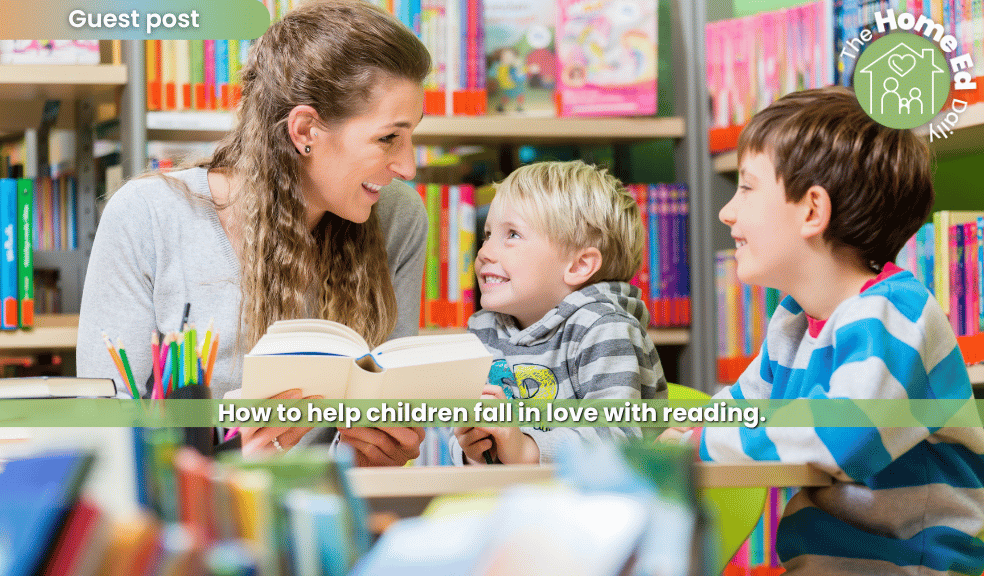
How to help children fall in love with reading. The power of reading aloud.
Learning to read is hard, and none of us like doing things that are hard without good reason. So, if children don’t see the point in learning to read, they will be very reluctant to do the hard work involved in being able to decode the jumble of letters on a page.
After all, as adults, which of us picks up a book for the pleasure of recognising squiggly shapes and joining them up into words in our heads? Deciphering text is not our motivation: we read because we have learnt the joy of being utterly absorbed in a story!
Schools and experts talk of the huge academic benefits for children who become confident readers – but what child will find these a compelling reason to drill phonics at the age of 4?! As parents, we know that reading will unlock a whole world of learning and (screen free!) relaxation for our children, but these ‘carrots’ are not appealing enough for most kids to enjoy the ‘stick’ of phonics flashcards and the levels of concentration required to blend their first words. As Julie Cigman, an early years consultant, stressed, ‘You don’t teach children to learn to swim by putting them on dry land learning swimming strokes’! (‘Secondary English Curriculum ‘crowds out’ reading for pleasure’ – ‘Schools Week’, 18th May 2026).
So, what is the key? It is to help our children fall in love with stories before we expect them to fall in love with books.
And how can we do it?
Read aloud,
Read aloud,
Read aloud!
I am convinced that the simplest and most effective way of helping children to fall in love with books is to read them stories – and I don’t mean read them stories just until they can read them for themselves! And, before you panic, if this sounds like too tall an order then audiobooks are your ally!
If we were all to read aloud to our children for 15 minutes every day, children would learn to love stories. They would be able to fall in love with the experience of being caught up and captivated by a world not their own without having to fight their way through phonics and ‘sounding out’. In the process, they would discover that the prize of accessing a story for themselves is worth the herculean effort of learning to read.
The key is that the stories being read to children have to be of the highest quality – the most inspiring, captivating, wonder-filled, exciting books that we can find – so that children’s emotions are caught up and their imaginations take flight. As Katherine Paterson, author of ‘The Bridge to Terabithia’ wrote, ‘It is not enough to simply teach children to read; we have to give them something worth reading’. How much more important is it then, to give children a reason to learn to read in the first place because we have fed them stories worth listening to?
The wonderful freedom of home education is that you can choose to make reading aloud a central part of your day. Team your read aloud time with cookies and colouring or lego to keep hands busy while you read and you are onto a winning combination! Consider theming your snack or your craft around the story you are sharing – this way we link reading in our kids’ brains with fun and joy! In our home educating, this reading time happened at 11 every morning – we worked our way through brilliant adapted versions of ‘The Odyssey’ and ‘The Iliad’ (‘The Wanderings of Odysseus’ and ‘Black Ships Before Troy’, both by Rosemary Sutcliffe), as well as some Shakespeare – chosen just because I wanted to introduce our children to things they would never encounter in mainstream primary school. I read, they ate and created, and it felt like a precious break in our day we all looked forward to.
Of course, while we focus on lighting a story-loving spark in our kids, there are other simple choices we can make that can feed into raising kids who fall in love with books:
Do teach phonics: but keep it light and compact! 10-15 minutes a day is plenty – and if your child isn’t absorbing what you are teaching, don’t panic! The chances are, they are just not ready. Drop phonics for a while and just enjoy reading and listening to stories together, then revisit them a few months down the line.
Choose books wisely: When your child is ready to blend phonics together, choose their first reading experiences wisely. Nothing is more likely to dull enthusiasm for reading than a boring story! Change up your early readers for books that give kids easy wins – my favourites are ones that are funny, so that children get immediate pleasure from being able to decode text independently. We loved Dr. Seuss – ‘The Cat in the Hat’, ‘Hop on Pop’, and ‘One Fish, Two Fish, Red Fish, Blue Fish’ are among the best for new readers. The combination of rhyme and repetition with incredibly descriptive illustrations is so perfect for guiding kids along. Also excellent are Mo Willems’ ‘Elephant and Piggie’ books – perfect for reading alongside an adult as each reader can play a part in the hilarious exchanges between the characters.
If your child is ready for reading independently, pick books that are about things they already love. Become a literary matchmaker for your child! If your child is into animals, give them books about animals. If they’re into football, find the best first chapter book you can about that – if at all possible, choose the first book in a series, so that there are more to go onto if it is a success! When they are trying to read independently for the first time, it will still feel like climbing a mountain. Make the trek easy on them! Stick close by, help with words where they get stuck, or take turns reading – do everything you can to keep the pursuit of the story alive!
Read yourself: it gets said a lot these days, but if our children see us reading for pleasure, it fuels their desire to read. If you take half an hour – or even ten minutes! - in your home-ed day to sit down and read a book where your kids can see you, it tells them without words that reading brings you joy!
Leave books lying around: always with covers on view! If there is a book you know your child will love, it’s always more likely they will read it if you leave it in a place you know they are likely to find it and pick it up on their own, than if you put it straight into their hands. You also get to enjoy the moment when you notice them immersed in it out of the corner of your eye – it’s a pretty satisfying feeling to know you picked right!
Create screen-free spaces in your home: Kids will choose a screen over a book nine times out of ten when given the option (it’s just the easier choice!), so if we want our kids to connect with books it’s important to create areas where reading is the only choice. Try and resist having ipads, and consider a screen free rule upstairs, so bedrooms are a bookish zone. We had quiet reading time straight after lunch in our home-ed day (a lifeline for me!) when our kids could pick up any books they wanted and had total free choice. All these strategies meant the time they had to fill with reading was massively increased!
Make books rewards! When children get to the stage when they can just about read independently, try allowing them the treat of having 15 minutes extra time before lights out to read. This became a rite of passage in our house, and a huge incentive to want to read, and for each of our children, this was the space in which they conquered their first chapter books. On holidays the kids always had a new book as their holiday treat and always have a book as part of their birthday presents.
If the stories we feed our kids from a young age are the very best – not dumbed down, not shallow, but full of wonder, hope, adventure, and moments that grab their hearts - I truly believe we can reverse the tide of reading apathy and spark a new passion in our children for books.
Author bio: Fliss Riste is founder of The Reading Rebellion, an online venture championing the very best in children’s books. She is a mum, home educator, volunteer librarian and English Literature graduate. You can browse the book recommendations on her website at: www.thereadingrebellion.co.uk.