






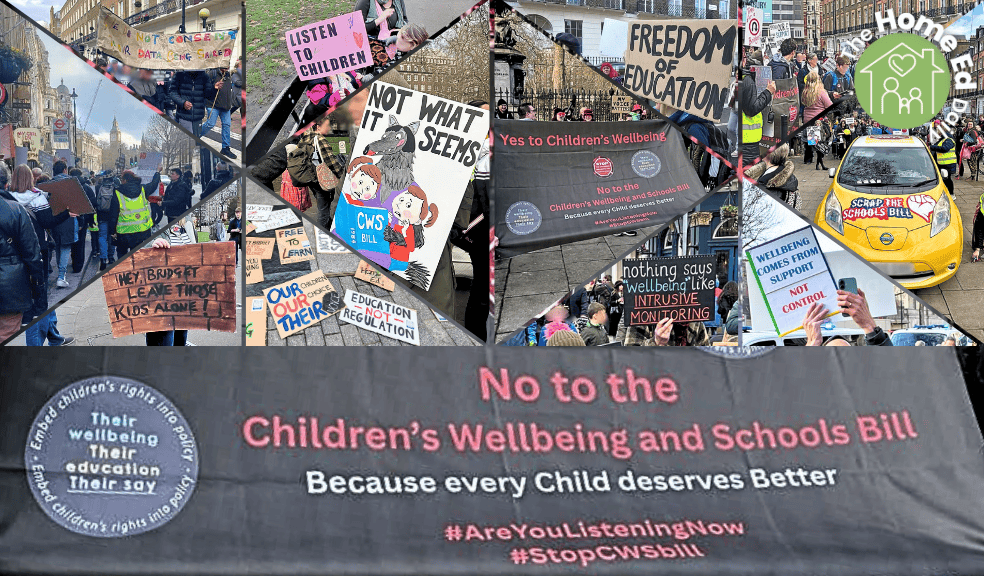
Children’s Wellbeing and Schools Bill 2025 Protest
What the January 17 rally reveals about opposition to the Bill. Yes to children’s wellbeing. No to the Children’s Wellbeing and Schools Bill.
On the 17th of January, families and campaigners gathered in central London to protest the Children’s Wellbeing and Schools Bill. They came from across the country. Home educating parents. Parents of children with special educational needs. Teachers, former professionals, legal voices and children’s rights advocates. They shared one clear message. Children’s wellbeing matters deeply. This Bill, in its current form, is not the way to protect it.
The march began at Russell Square and moved through to Whitehall. The route was intentional. It placed families and children directly in view of those shaping education policy. Calm, peaceful, and determined, the march marked the most visible point so far in a campaign that has grown steadily and cannot now be dismissed as marginal. Opposition to the Bill has been building for months. It became impossible to ignore when a public petition calling for its withdrawal passed 166,000 signatures. That figure triggered a parliamentary debate in December, where MPs raised serious concerns about proportionality, parental rights, school autonomy, and the long term impact of expanding state oversight into family life. The protest made one thing clear. Support for children’s wellbeing does not equal automatic support for this legislation.
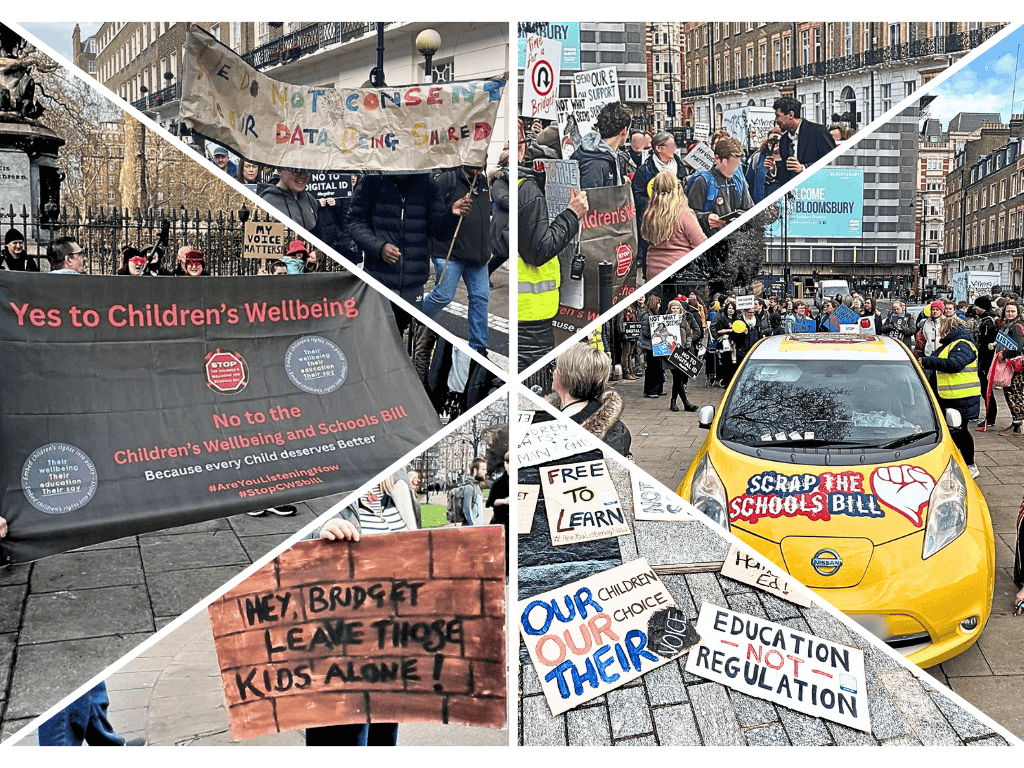
Two messages, one banner
Many placards carried a deliberate pairing of words. Yes to children’s wellbeing. No to the Children’s Wellbeing and Schools Bill. Campaigners say this distinction has been repeatedly blurred. Too often, disagreement with the Bill is framed as opposition to safeguarding itself. Families at the march rejected that outright. They spoke instead about trust. About support. About services that work with families rather than acting on suspicion. Many warned that increased surveillance, compulsory registration and enforcement risk damaging relationships at the very point cooperation matters most.
What has changed and why families are alarmed
Recent proposed amendments have intensified concern, particularly for home ed families. Under these changes, parents would be required to meet with their local authority before deregistering a child from school, often with the child present. Families described how harmful this could be for children who are already burnt out, anxious, or in crisis. A meeting designed to discourage alternative education is not a neutral space for a struggling child. The amendments also introduce new powers for local authority home visits shortly after a family begins home educating, to assess the child’s living arrangements. For many families, this represents a serious intrusion into private family life.
Parents of children with special educational needs spoke about the reality behind these policies. Children who cannot cope with unfamiliar adults. Children whose homes are their only place of safety after school based trauma. Under the proposed framework, families fear being penalised for prioritising their child’s physical, mental, and emotional wellbeing.
A widening double standard
Speakers at the rally also highlighted what they see as a growing imbalance in how education is treated. Local authorities already have the power to issue school attendance orders (SAO) if they judge the home education to be unsuitable. Yet there is no equivalent system that checks whether individual children in school are having their educational, emotional and wellbeing needs met! Yes, Ofsted inspects schools against school standards. But it does not assess whether a child is thriving, or whether school is harming them. Critics argue that the Bill deepens this double standard. It increases scrutiny of home education while doing little to address the ongoing harm experienced by many children within the school system.
The concerns voiced on the day were stark. The state is more comfortable with a child being unhappy or unwell in school, than being safe and settled at home.
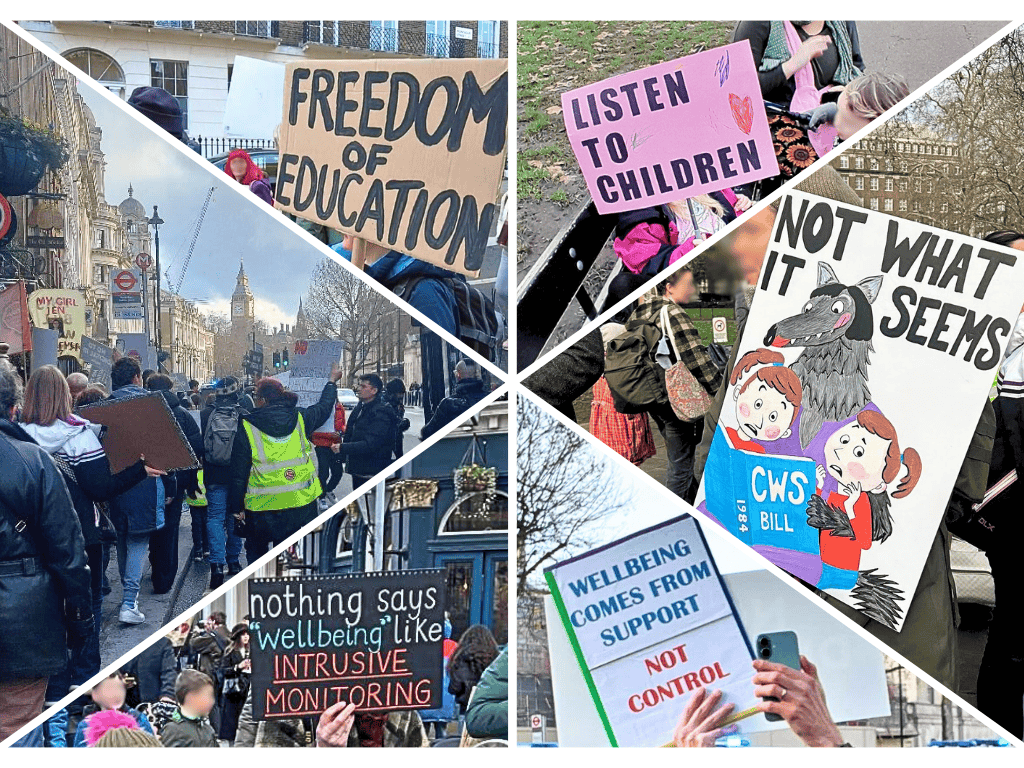
Who spoke and why it mattered
The rally at Whitehall brought together a wide range of voices. SEND campaigners stood alongside home educating parents, former teachers, social care professionals, legal commentators and civil liberties advocates. Their perspectives differed, but their conclusions aligned. This Bill, they argued, leans towards control rather than care. It risks criminalising responsible parents. It may push vulnerable children into unsuitable provision under the banner of safeguarding. And it expands state power without fixing the root problems families face. Several speakers questioned whether increased intervention would genuinely improve safety, or whether it would instead drive families away from services and create new safeguarding risks.
Watch a video of the key speakers
Not the end
For ministers, the protest represents a growing political problem. The language of children’s wellbeing carries moral weight. But the size, persistence and tone of opposition show that families are informed, organised and determined. Those involved are not opposed to reform. Many have spent years calling for better support, especially for children with additional needs. Their call now is for humility, for listening, and for meaningful consultation. Organisers were clear that the protest was not an endpoint. It was a call to pause. To amend. To engage properly with families, before pressing ahead with legislation that could cause harm and have lasting consequences.
Children’s wellbeing is not created through monitoring and fear, but through trust, safety and relationship. Laws that fail to recognise this, risk doing real harm.
For the latest detailed information on the Children's Wellbeing & Schools Bill, follow Ed Yourself's website page
Photo credits: Spilling the Tea on Autism and ADHD, Juliet English, and Stop the Children's Wellbeing & School's Bill
Read more articles on the Children's Wellbeing and Schools Bill