





Creating a home education space that works for your family
Home education set-up. Do you need a dedicated learning space?
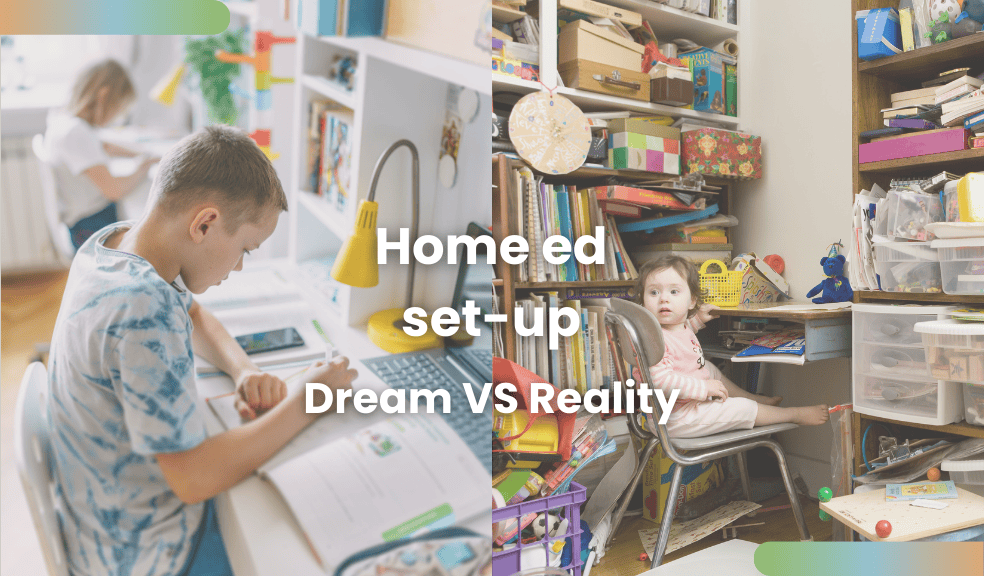
It is very easy to feel a bit inadequate when scrolling through social media or home education blogs. Those beautifully styled posts showing immaculate learning spaces can make our own homes feel a little lacking by comparison. But the truth is, a lot of it is social media gloss.
At the start of each school term, or whenever people are in that fresh start mood, there always seems to be a wave of posts sharing their home education set-ups. One place this often happens is the Twinkl Home Ed Parents Facebook group. It is a lovely and genuinely helpful group, and many of the posts are inspiring. But on harder days, I will admit they can leave me feeling slightly inadequate, and perhaps a little envious too.
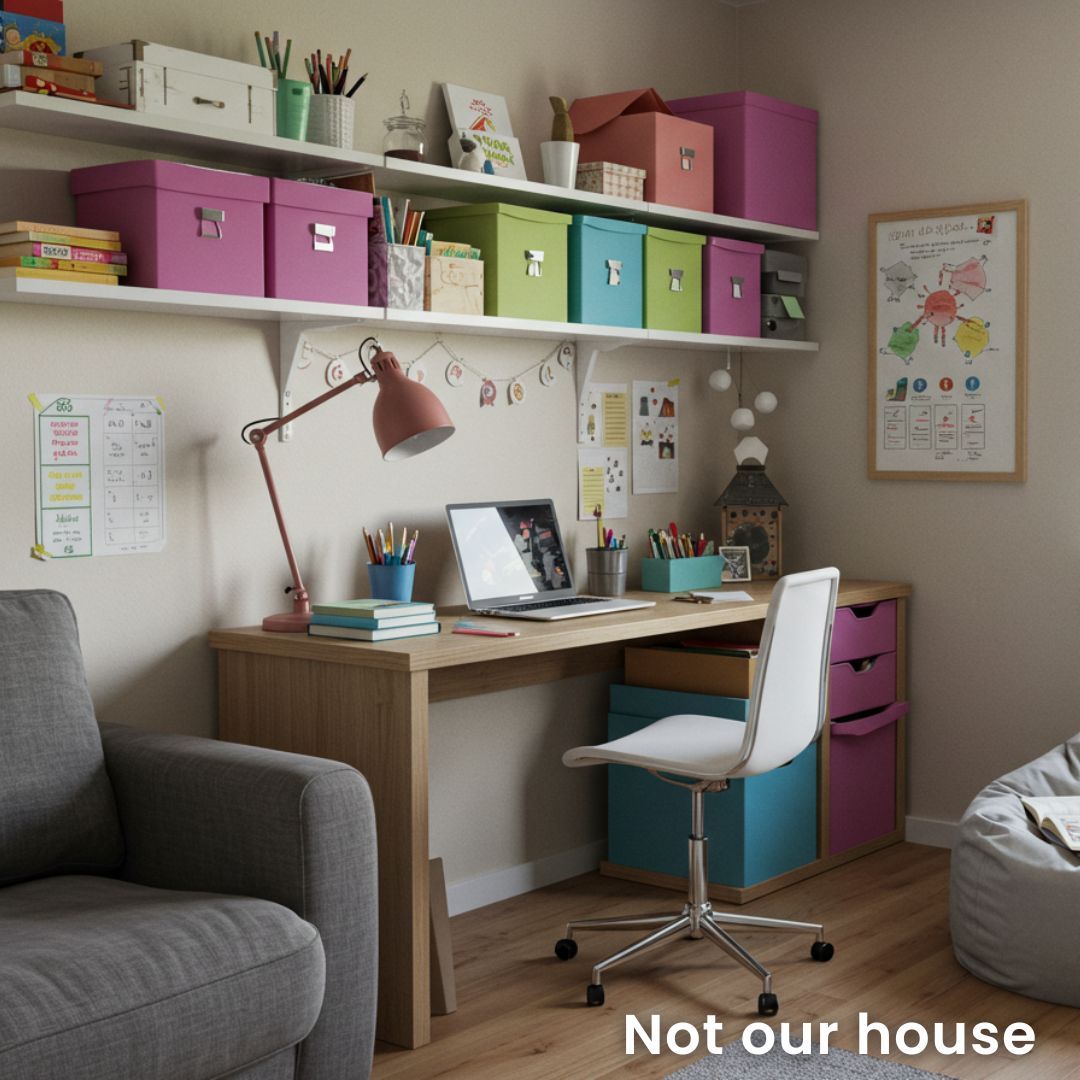
You often see gorgeous rooms with proper desks, plenty of space, and neatly organised shelves. There are posters, curriculum-style displays, carefully arranged morning baskets, art stations, craft trolleys, and colour-coded files. Some families have whole units of work printed, planned, and beautifully bound. I will admit, I am always a little jealous of anyone with a ring binder machine. Stationery has always been a weakness of mine.
By contrast, our own set-up is much more thrown together. It is unplanned, slightly chaotic, and very much in the shove-it-in-and-make-do category. There is also inevitably a cat on our books pushing pens off the table. But it works for us, and that is what matters. It may not be Pinterest-perfect, but it is real life.
Believe me, if I could I would very happily claim a whole room for home educating. Sadly, our actual bank balance has other plans!
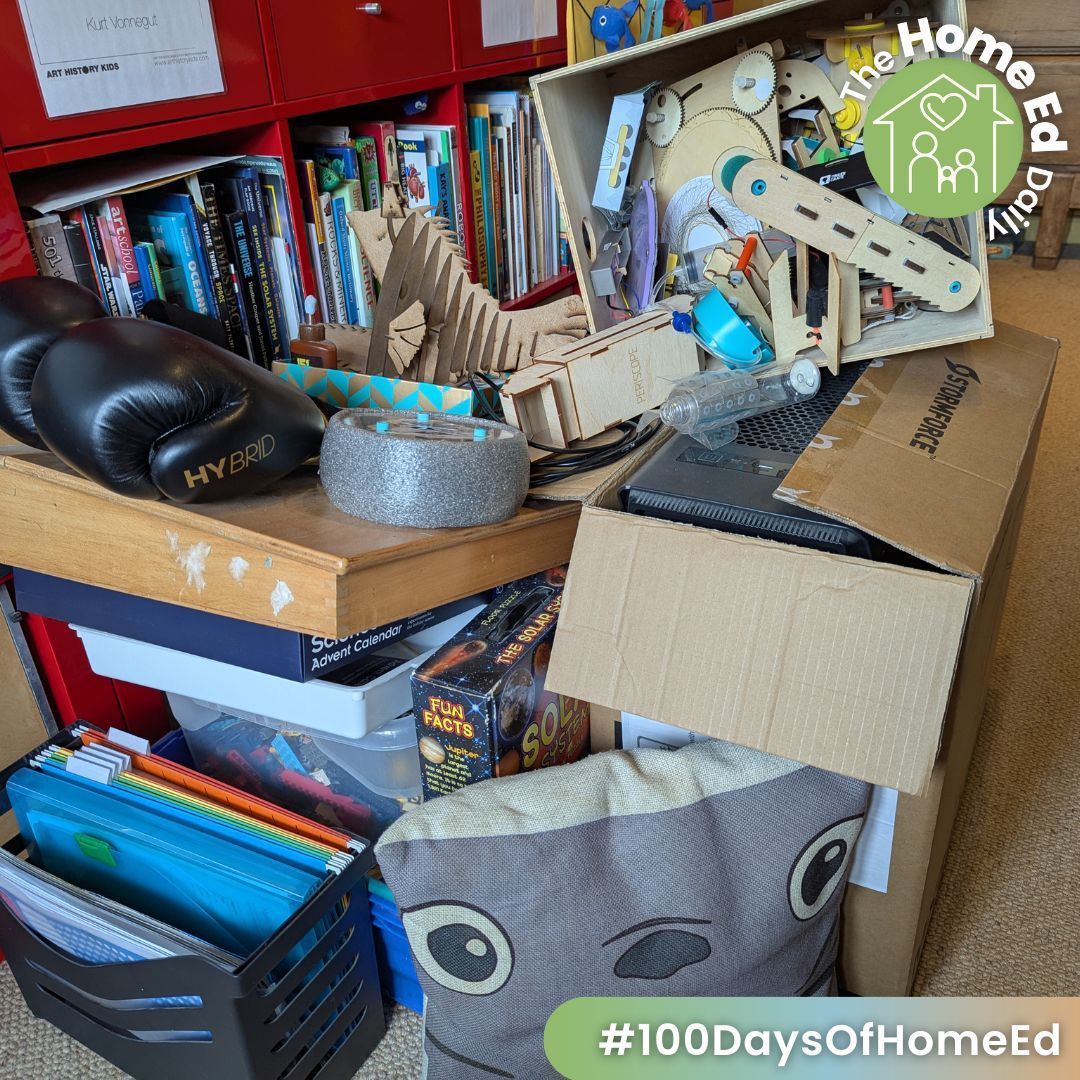
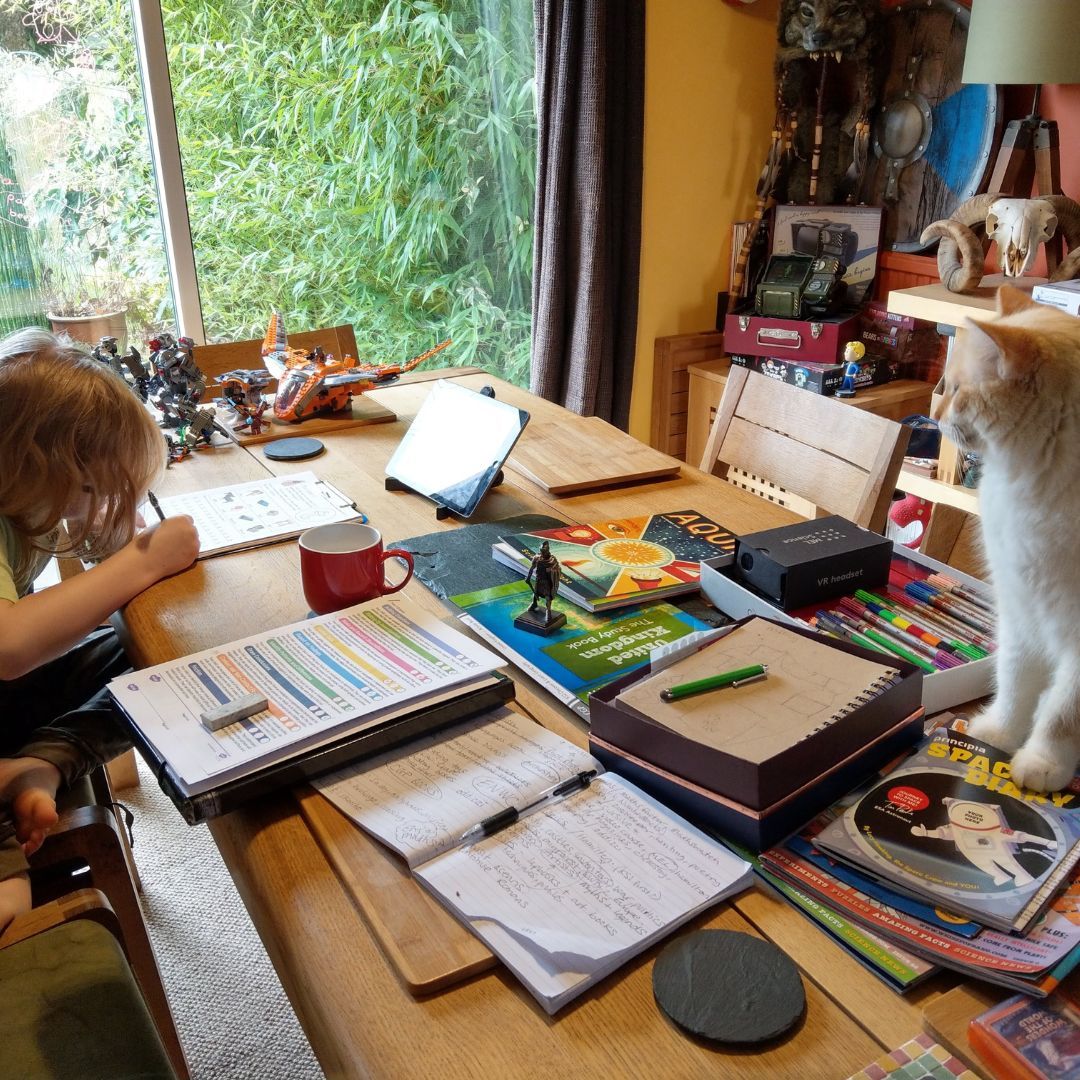
If we had, or could afford, a larger house, I would very happily have a dedicated home ed room. Sadly, that just is not our reality. Like many families, we make use of the space we have, and honestly, that is enough. Home education does not need a perfect room, matching furniture, or an Instagram-worthy set-up to work well.
A learning space can be a corner of the kitchen table, a basket of supplies in the living room, a shelf in the hallway, or a few favourite resources tucked into a cupboard. What matters most is that it feels usable, welcoming, and easy to return to. And of course, so much learning happens beyond any set space anyway, outdoors, in the car, at the library, on walks, at museums, in cafés, at groups, and on days out. Home education is not confined to four walls.
A few simple things can make a real difference. Keep your most-used resources within easy reach. Try to make one surface easy to clear and use, even if it is shared with everyday family life. Good light helps, and so does somewhere comfortable to sit, whether that is a chair, sofa, beanbag, or the floor. It can also help to rotate resources rather than having everything out at once. Less visual clutter often makes it easier for children to settle.
Most of all, remember that a home ed space does not need to look impressive. It just needs to work for your family.
Practical tips and storage ideas
-
Keep your most-used items together in one place, such as a basket, crate, or trolley.
-
Use folders or magazine files for loose worksheets, sketchbooks, and printed resources.
-
Store pens, scissors, glue, and small supplies in jars, tubs, or drawer organisers.
-
Use clear plastic wallets for part-finished projects so they do not get lost.
-
Rotate books and resources rather than leaving everything out all the time.
-
Make use of vertical space with shelves, hooks, or wall pockets if floor space is limited.
-
Keep a small grab-and-go bag for outings with notebooks, pencils, reading books, and simple activities.
-
Use trays or shallow boxes to create quick table-based activities that can be lifted away easily.
-
Give each child their own box, drawer, or basket for personal projects and favourite resources.
-
Have a simple reset routine at the end of the day, so the space is ready to use again tomorrow.